

Electronic Adhesive Supply System | A Complete Guide for Industrial Dispensing
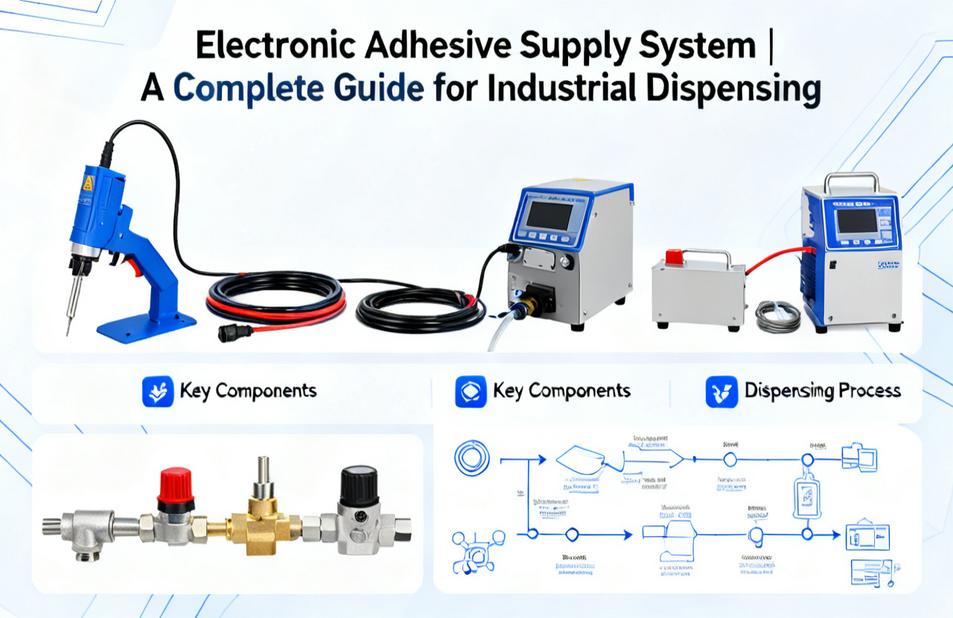
An electronic adhesive supply system is a centralized fluid delivery solution that stores, conditions, and feeds adhesives, sealants, and potting compounds to dispensing points in electronics manufacturing and industrial assembly. Unlike simple pressure pots, these systems often integrate pumps, pressure regulation, level sensing, and heated or degassed reservoirs to maintain consistent material properties from the drum to the nozzle. For OEMs and contract manufacturers, the right supply system reduces waste, improves bond repeatability, and supports automated production lines where manual refilling is impractical.
What an Electronic Adhesive Supply System Actually Does
At its core, the system manages the flow of adhesive from bulk containers to one or more dispensing valves or robots. It may use a follower plate to push high-viscosity material from a pail, a progressive cavity or gear pump for precise volumetric delivery, or a pressure vessel for low-viscosity fluids. Sensors monitor pressure, temperature, and material level, while controls communicate with PLCs or dispensing robots to synchronize flow with machine motion.
In electronics applications, the material often needs degassing to remove entrapped air or heating to reach the correct application viscosity. A well-designed supply system keeps these parameters stable, so the adhesive that reaches the PCB, connector, or sensor housing behaves the same at the start and end of a production run.
Key Components and Construction
Most industrial adhesive supply systems share several subassemblies:
- Reservoir or drum follower: holds the adhesive and may include a heated jacket or agitation.
- Pump or pressure regulator: moves material at controlled rates without shearing sensitive formulations.
- Hoses and feed lines: often heated or insulated to prevent viscosity drift.
- Valves and dispensers: interface with the point of application, whether manual, time-pressure, or volumetric.
- Control cabinet: manages temperature, pressure, level, and communication with host machinery.
Materials of construction depend on the adhesive chemistry. Stainless steel wetted parts are common for moisture-sensitive polyurethanes and epoxies, while some systems use coated or plastic components for cyanoacrylates and UV-cure materials. Because adhesives can cure in place, easy disassembly and purgeability are practical design considerations that buyers should verify with the supplier.
Typical Industrial Applications
Electronic adhesive supply systems serve applications where repeatable deposit size and material consistency are critical. Common uses include:
- PCB conformal coating and component bonding
- Potting and encapsulation of sensors, connectors, and power modules
- Sealing of enclosures and connectors in automotive electronics
- Surface mount adhesive application before reflow
- Thermal interface material dispensing for heat sinks and battery packs
- Micro-dispensing for camera modules and medical electronics
In each case, the supply system must match the adhesive rheology, pot life, and cure schedule. A system that works well for a low-viscosity UV adhesive may not handle a filled thermal gel or a two-part epoxy with a short working time.
How to Choose the Right System for Your Line
Selecting an electronic adhesive supply system starts with the material, not the hardware. Buyers should document viscosity range, fillers and particle size, moisture sensitivity, required flow rate, and whether the adhesive is single-component or requires mixing. From there, consider the following:
1. Feed method and container size
Will the system draw from syringes, cartridges, pails, or drums? High-volume production often justifies bulk drum feed with a follower plate, while low-volume or high-mix operations may prefer cartridge-based supply to reduce waste and changeover time.
2. Flow control and accuracy
Time-pressure systems are simpler but can drift as viscosity changes. Volumetric pumps, such as progressive cavity or piston designs, offer more consistent shot sizes for critical electronics bonding. The required deposit tolerance and cycle time will guide this choice.
3. Heating, degassing, and mixing
If the adhesive needs elevated temperature or vacuum degassing, the supply system must include those functions without damaging the formulation. Two-part materials may require inline mixing or static mixing at the dispense point.
4. Integration with robots and PLCs
Check available communication protocols, I/O signals, and whether the supplier can support integration with your existing dispensing robot or conveyor line. A system that cannot exchange start, stop, and fault signals with the host machine creates unnecessary manual intervention.
5. Maintenance and changeover
Ask how the system is cleaned, how quickly a material change can be completed, and whether replacement parts are readily available. In high-mix electronics production, changeover time directly affects uptime.
Customization and OEM Options
Many industrial adhesive supply systems are available as standard platforms that can be customized for specific materials, container sizes, and floor layouts. A manufacturer or supplier may offer OEM configurations with branded controls, modified reservoirs, or application-specific dispense valves. Custom options can include:
- Special wetted materials for reactive or abrasive adhesives
- Multiple dispense outlets from one central supply
- Explosion-proof or cleanroom-compatible enclosures
- Data logging and traceability features
- Footprint adjustments for existing production cells
When requesting a custom build, provide the adhesive technical data sheet, required flow rate, duty cycle, and available utilities. This helps the factory specify pumps, heaters, and controls correctly rather than over- or under-sizing the system.
Supplier Selection and Buying Considerations
Working with an experienced manufacturer or supplier reduces the risk of integrating a supply system that does not perform as expected. Evaluate potential partners on:
- Experience with your adhesive type and industry
- Ability to provide references or test data without overstating claims
- Support for installation, training, and spare parts
- Willingness to discuss OEM or custom requirements
- Clear communication about lead times and documentation
Price should be considered alongside total cost of ownership, including material waste, maintenance, and downtime. A lower-cost system that requires frequent purging or fails to hold temperature may cost more over a production year than a better-matched unit.
Frequently Asked Questions
Can an electronic adhesive supply system handle both low and high viscosity materials?
Not always with the same pump and feed configuration. Low-viscosity adhesives may suit pressure vessels, while high-viscosity or filled materials often require a follower plate and volumetric pump. Some systems are modular and can be reconfigured, but buyers should confirm the viscosity range with the supplier before purchase.
Is a heated supply system necessary for all electronic adhesives?
No. Heating is needed only when the adhesive requires a specific application temperature to achieve the correct flow or cure behavior. Many room-temperature adhesives dispense well without heating, but temperature control can still improve consistency in fluctuating factory environments.
How do I know if I need a custom OEM system versus a standard model?
If your adhesive container size, flow rate, dispense point count, or cleanroom requirements fall outside standard offerings, a custom or OEM configuration may be more practical. Discuss your application with the manufacturer to determine whether a standard platform can be adapted or a new design is justified.
What information should I prepare before contacting a supplier?
Prepare the adhesive technical data sheet, required shot size or flow rate, number of dispense points, production cycle time, available floor space, and utility requirements. This information allows the supplier to recommend a suitable electronic adhesive supply system and identify any customization needs.
Conclusion
Choosing an electronic adhesive supply system is a matter of matching material characteristics, production volume, and integration needs. Focus on feed method, flow accuracy, thermal control, and serviceability rather than headline specifications alone. For OEM and custom projects, early consultation with a manufacturer helps avoid costly mismatches. If you are evaluating options for your electronics assembly line, contact a qualified supplier to discuss your adhesive, application, and customization requirements.
