

Industrial Dispensing Equipment | A Buyer’s Guide to Selection and Customization
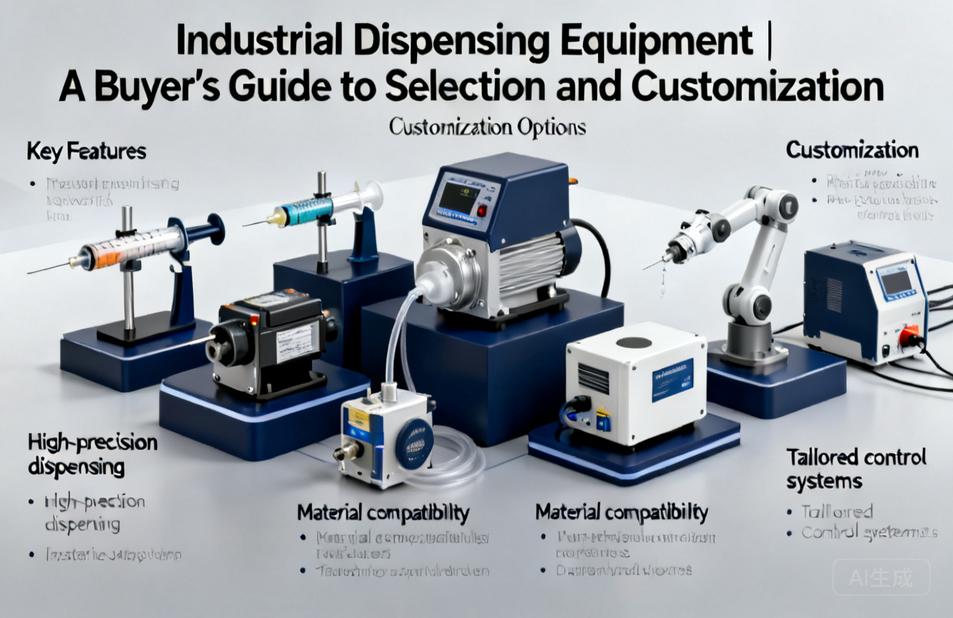
Industrial dispensing equipment is used to apply controlled amounts of liquids, adhesives, sealants, lubricants, and pastes in manufacturing and assembly processes. Whether you are bonding components in electronics, potting sensors, or applying thermal paste in automotive production, choosing the right system directly affects product quality and line efficiency. This guide is written for overseas buyers who need a clear, practical understanding of what this equipment does, how it works, and what to consider when sourcing from a manufacturer or supplier.
What Is Industrial Dispensing Equipment?
At a basic level, industrial dispensing equipment includes any machine or accessory that delivers a measured amount of material to a specific point. Systems range from simple hand-held syringes and pneumatic valves to fully automated gantry robots that move over a conveyor. The core function is repeatability: in modern production, the volume of adhesive or sealant applied must be consistent from part to part. This is why buyers focus not only on the dispenser itself but also on the pump, valve, controller, and material supply system working together.
Key Components and How They Work
A typical dispensing system consists of a material reservoir or pressure tank, a pump or pressure regulator, a dispensing valve or nozzle, and a motion platform if automatic operation is needed. Pneumatic systems use air pressure to push material through a valve, while progressive cavity or gear pumps handle higher-viscosity fluids. Time-pressure systems are common for low-cost applications, but volumetric pumps are preferred when shot size must remain stable regardless of changes in viscosity.
For automated lines, the dispenser is integrated with a gantry robot, a conveyor, or a collaborative robot arm. The controller receives signals from the PLC or vision system and triggers the valve at the correct moment. This level of integration allows manufacturers to dispense dots, lines, or complex patterns with high precision.
Materials and Construction Considerations
Material compatibility is one of the first technical questions a buyer should ask. Wetted parts must resist the chemicals in the fluid, whether it is cyanoacrylate, epoxy, silicone, polyurethane, or solder paste. Common materials include stainless steel, aluminum, PTFE, and engineered plastics. The choice affects service life and maintenance frequency.
Housings and frames should be robust enough for the production environment. Powder-coated steel or stainless steel frames are typical in factory settings. For cleanroom applications, smooth surfaces and minimal particle generation become important. While specific material grades depend on the fluid and environment, a supplier should be able to explain why certain materials are offered and how they perform with the intended medium.
Typical Industrial Applications
Industrial dispensing equipment appears across many sectors. In electronics, it applies underfill, conformal coating, and thermal interface material. In automotive manufacturing, it handles gasketing, bonding, and lubrication. Medical device production uses dispensing for catheter bonding and reagent deposition. Packaging lines use it for hot melt adhesive. Because each application has different viscosity, cure behavior, and tolerance requirements, the equipment must be matched to the process rather than selected from a catalog alone.
How to Choose the Right System
Start by defining the fluid characteristics: viscosity, fillers, pot life, and cure method. Then determine the required shot size and tolerance. A manual dispenser may be adequate for low-volume or prototype work, while a volumetric pump and automated gantry are necessary for high-volume production with tight tolerances. Consider the substrate and part geometry, because these influence nozzle selection and motion path.
Other practical factors include cycle time, integration with existing PLC or MES systems, and operator training. Buyers should also think about maintenance and spare parts availability. A system that is difficult to service can disrupt production more than a slightly slower but more reliable alternative.
Customization and OEM Options
Many projects require custom configurations. A manufacturer or supplier may offer OEM services to adapt the dispenser to a specific machine frame, communication protocol, or material supply. Custom nozzle assemblies, heated reservoirs, and multi-valve setups are common requests. When discussing customization, provide drawings, fluid data sheets, and production targets. A capable factory will review the application and propose a configuration rather than simply quote a standard model.
Buying Considerations for Overseas Procurement
When sourcing from an international supplier, verify the scope of supply: what is included, what is optional, and what the buyer must provide locally. Ask about voltage and plug standards, documentation language, and warranty terms. For automation projects, request a factory acceptance test if possible. Shipping and import duties also affect total cost, so clarify Incoterms and packaging method.
Documentation matters for maintenance and troubleshooting. Operation manuals, wiring diagrams, and spare parts lists should be available in English or the buyer’s language. If the equipment will be integrated into an existing line, confirm that the supplier can provide technical support during commissioning, whether remotely or on-site.
Supplier Selection: What to Evaluate
A reliable supplier demonstrates application knowledge, not just product listings. Ask how they select valves for different viscosities, how they handle after-sales support, and whether they have experience with your industry. A manufacturer with in-house machining and assembly can often respond faster to customization requests. Visit the factory if feasible, or request video documentation of the production and testing process. References from similar applications are valuable, but treat them as part of a broader evaluation rather than the only criterion.
Frequently Asked Questions
What is the difference between time-pressure and volumetric dispensing?
Time-pressure systems use air pressure and valve open time to control the shot, which is simple and low cost but sensitive to viscosity changes. Volumetric systems use a pump to displace a fixed volume, giving better repeatability for demanding applications.
Can industrial dispensing equipment handle high-viscosity materials?
Yes, but the pump, valve, and supply system must be selected accordingly. Progressive cavity pumps, gear pumps, and heated reservoirs are often used for high-viscosity fluids. The supplier should confirm compatibility based on the material data sheet.
Is OEM or custom dispensing equipment available?
Many manufacturers offer OEM and custom solutions, including special nozzles, multi-valve configurations, and integration with existing automation. Provide detailed process requirements so the supplier can propose a suitable configuration.
What support should I expect after purchase?
Support varies by supplier. Typical support includes installation guidance, operator training, spare parts, and technical assistance. Confirm the terms in writing before placing an order, especially for cross-border projects.
Conclusion
Selecting industrial dispensing equipment is a process of matching fluid properties, production volume, and automation needs. Focus on repeatability, material compatibility, and serviceability rather than lowest initial price. If you are evaluating a manufacturer or supplier for a specific application, share your fluid details, part geometry, and output targets. A qualified factory can then recommend a standard model or discuss OEM and custom options that fit your line.