

Adhesive Pressure Vessel | A Practical Guide for Industrial Buyers and OEM Projects
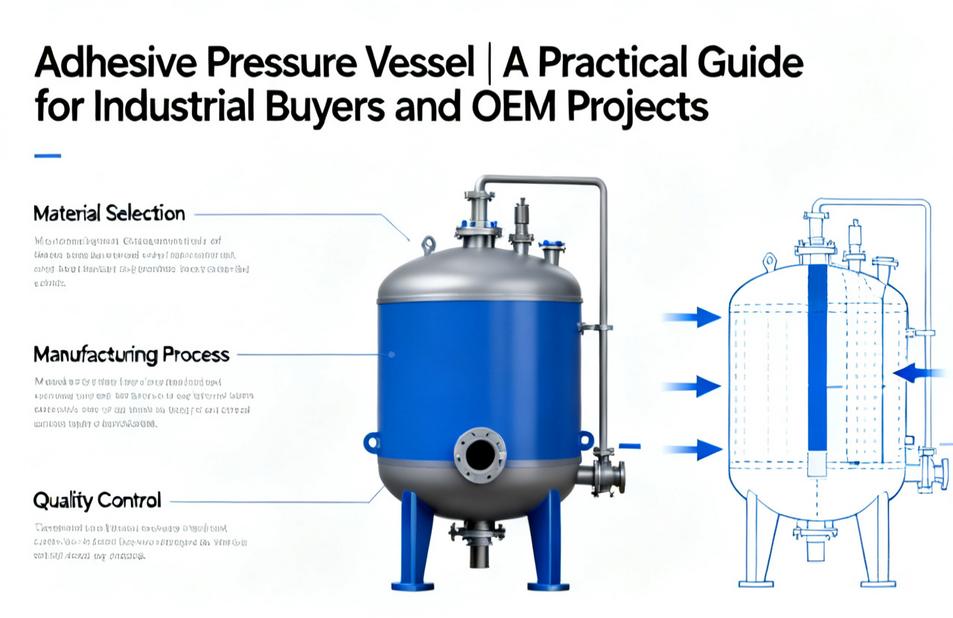
An adhesive pressure vessel is a sealed container designed to hold adhesives, sealants, or similar viscous fluids under controlled pressure so they can be delivered consistently to dispensing valves, spray guns, or automated applicators. In industrial settings, these vessels are often part of a fluid delivery system that helps maintain steady flow, reduce pulsation, and support repeatable adhesive application. For buyers sourcing equipment for packaging, automotive assembly, electronics, woodworking, or general manufacturing, understanding how an adhesive pressure vessel works and what to evaluate before purchasing is essential for matching the tank to the process.
What Is an Adhesive Pressure Vessel and How Does It Work?
An adhesive pressure vessel typically consists of a pressure-rated tank body, a lid with a gasket and clamp or bolt closure, fluid inlet and outlet ports, a pressure regulator, and safety relief features. In many systems, compressed air or an inert gas is introduced above the adhesive to push the material through a outlet line toward the dispensing point. The vessel may be used as a standalone supply tank or integrated into a larger adhesive circulation or metering system. The working principle is straightforward: controlled pressure moves the adhesive at a stable rate, which helps maintain bead size and placement in automated or manual dispensing operations.
Common Configurations
Adhesive pressure vessels are available in several configurations depending on the material and process. A pressure pot for adhesive dispensing is often a vertical tank with a removable lid for refilling. Some units are designed as pressure tanks for sealants and mastics, while others serve as day tanks or buffer vessels in circulation loops. The vessel may be heated or insulated when the adhesive requires elevated temperature to achieve proper viscosity. Stainless steel construction is common in applications where corrosion resistance and easy cleaning are important, while carbon steel may be used in less demanding environments.
Key Features Buyers Should Evaluate
When reviewing an adhesive pressure vessel for a specific production line, several design and operational features deserve attention. These factors influence performance, maintenance, and long-term reliability.
- Pressure rating and control: The vessel must be compatible with the required working pressure and the pressure ratings of downstream components such as hoses, regulators, and dispense valves. Buyers should confirm that the vessel is designed for the intended pressure range and that safety relief devices are included.
- Material compatibility: The wetted parts must be compatible with the adhesive chemistry, including solvents, water-based formulations, and reactive materials. Stainless steel, coated carbon steel, or specialized linings may be specified based on the adhesive type.
- Ports and connections: Inlet, outlet, vent, and drain ports should match the existing fluid circuit. The size and type of fittings affect flow rate and cleanability.
- Agitation or recirculation: Some adhesives separate or settle over time. A vessel with agitation or a recirculation connection can help maintain uniformity.
- Temperature management: Heated or jacketed vessels support adhesives that require temperature control for consistent viscosity and flow.
- Cleaning and maintenance access: A removable lid, smooth internal surfaces, and accessible fittings reduce downtime during color changes or product switchovers.
Materials and Construction Considerations
The construction of an adhesive pressure vessel affects durability, corrosion resistance, and compatibility with the adhesive being dispensed. Stainless steel grades such as 304 and 316 are frequently selected for industrial adhesive systems because they resist many chemicals and are easy to clean. Carbon steel vessels may be painted or coated for less aggressive environments. The gasket material, often selected from options such as PTFE, Viton, or EPDM, must also be compatible with the adhesive and any solvents present. Welded seams, surface finish, and pressure boundary details are important for safety and leak prevention. Buyers should request documentation on materials of construction and pressure testing where available, but specific values should always be confirmed with the manufacturer for the exact model under consideration.
Industrial Applications for Adhesive Pressure Vessels
Adhesive pressure vessels are used across many industries where controlled delivery of adhesives and sealants is required. In packaging, they supply hot melt or cold glue to folder-gluers and case sealers. In automotive assembly, they feed sealants, structural adhesives, and sound-deadening materials to robotic dispensers. Electronics manufacturing may use pressure vessels for potting compounds, conductive adhesives, or underfill materials. Woodworking operations use them for edge banding adhesives and assembly glues. Other applications include filter bonding, nonwoven fabric lamination, and general product assembly. The common requirement is a stable, repeatable flow of adhesive to the point of application, often in automated or semi-automated production lines.
How to Choose the Right Adhesive Pressure Vessel
Selecting the correct vessel involves matching the equipment to the adhesive, the dispensing method, and the production environment. Start by identifying the adhesive type and its properties, including viscosity, solids content, and sensitivity to temperature or moisture. Next, determine the required flow rate and pressure at the dispense point, then work backward to the vessel capacity and pressure rating. Consider the available floor space and whether the vessel will be stationary or portable. Evaluate the connection types needed for the existing pump, hose, and valve system. If the adhesive requires heating or agitation, confirm that the vessel supports those features. Finally, review maintenance requirements and the availability of replacement parts, as these affect total cost of ownership.
Matching the Vessel to Your Dispensing System
The vessel must integrate smoothly with the rest of the fluid delivery system. Check the outlet port size and type against the inlet of the pump or pressure regulator. Confirm that the vessel pressure rating is compatible with the maximum system pressure. If the adhesive is supplied in drums or pails, consider whether a drum-mounted pressure vessel or a transfer system is more suitable. For automated lines, the vessel may need to communicate with a PLC or dispensing controller for pressure monitoring and refill signals. Early coordination with the equipment supplier helps avoid mismatches that can lead to downtime or inconsistent adhesive application.
Customization and OEM Options
Many adhesive pressure vessel suppliers offer customization to meet specific process requirements. Custom options may include non-standard tank sizes, specialized port configurations, alternative materials of construction, heating or cooling jackets, agitation systems, and mobility features such as carts or mounting brackets. OEM projects may involve private labeling, custom control interfaces, or integration with existing machinery. When discussing a custom vessel, buyers should provide detailed specifications, including adhesive characteristics, required pressure and flow, connection types, environmental conditions, and any industry-specific standards that apply. A manufacturer with engineering support can help translate these requirements into a practical vessel design.
Supplier Selection and Buying Considerations
Choosing a reliable supplier is as important as selecting the right vessel. Look for a manufacturer or supplier with experience in adhesive handling and fluid delivery systems. Evaluate their engineering capabilities, quality control processes, and ability to provide documentation such as material certificates and pressure test reports. Ask about lead times, warranty terms, and after-sales support, including spare parts availability. If the project involves OEM or custom work, confirm that the supplier has a track record of collaborating with equipment integrators and end users. Request references or examples of similar applications where possible, and consider whether the supplier can support future expansion or modifications.
Frequently Asked Questions
What is the difference between an adhesive pressure vessel and a standard pressure tank?
An adhesive pressure vessel is specifically configured for dispensing adhesives, sealants, and similar materials. It may include features such as agitation, heating, or specialized ports that are not always found on general-purpose pressure tanks. The selection depends on the adhesive properties and the dispensing system requirements.
Can an adhesive pressure vessel be used with different types of adhesives?
Compatibility depends on the materials of construction, gaskets, and internal surfaces. A vessel used for one adhesive may not be suitable for another without proper cleaning or component changes. Buyers should confirm chemical compatibility with the supplier before switching adhesives.
How do I determine the right size and pressure rating for my application?
Size and pressure rating should be based on the required flow rate, adhesive viscosity, dispense pressure, and production volume. Reviewing the specifications of the downstream valves and pumps helps define the operating parameters. A supplier with application experience can assist with sizing.
Are custom or OEM adhesive pressure vessels available?
Many manufacturers offer custom and OEM options, including modified dimensions, port layouts, materials, and control features. Providing detailed application information allows the supplier to propose a vessel that fits the specific production process.
Conclusion
An adhesive pressure vessel plays a critical role in maintaining consistent adhesive delivery for many industrial processes. When evaluating options, focus on material compatibility, pressure control, integration with the dispensing system, and the supplier’s ability to support customization or OEM requirements. Buyers should gather application details early and work with a manufacturer or supplier who understands both the adhesive and the equipment. For projects involving unique specifications, contacting a supplier to discuss the application, required modifications, or OEM collaboration is a practical next step toward a reliable adhesive delivery solution.
