

Glue Dispensing Pressure Tank | A Practical Guide for Industrial Buyers
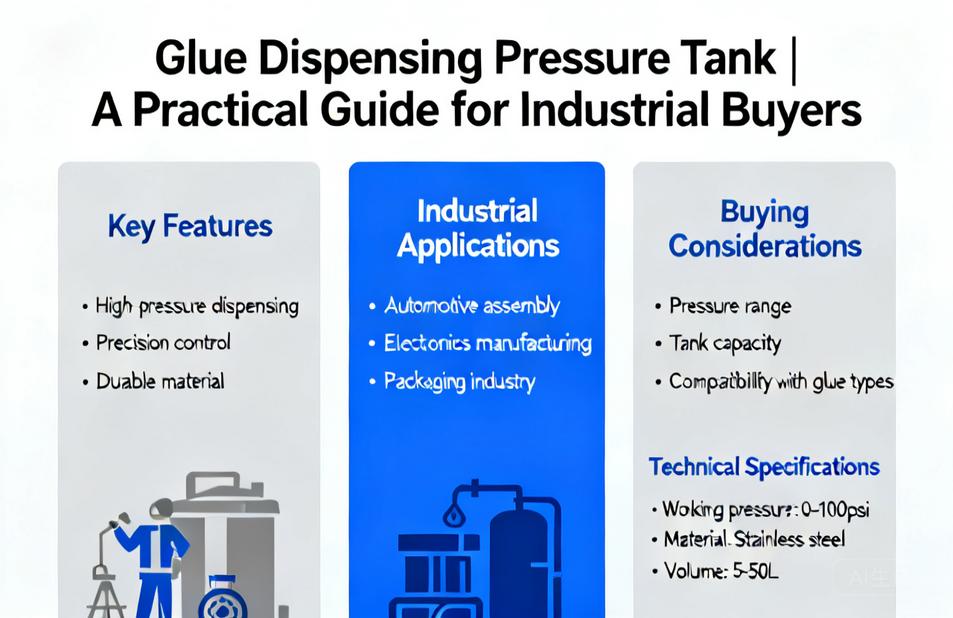
A glue dispensing pressure tank is a pressurized vessel that stores adhesive, sealant, or other dispensing fluids and delivers them to a dispensing valve or nozzle at a controlled, steady pressure. Instead of relying on a pump to move high-viscosity material, the tank uses compressed air to push the glue from the tank through a hose to the dispensing point. This makes it a common choice in manufacturing environments where consistent bead size, reduced material waste, and simple maintenance matter. Whether you are bonding automotive components, sealing electronic enclosures, or assembling furniture panels, understanding how a pressure tank fits into your dispensing system helps you specify the right equipment and avoid production downtime.
How a Glue Dispensing Pressure Tank Works
The working principle is straightforward. Adhesive is loaded into a sealed tank, often through a removable lid or a follower plate. Compressed air is introduced into the tank above the adhesive, creating pressure that forces the material out through an outlet port. A pressure regulator allows the operator to adjust the dispensing pressure, which directly affects the flow rate and the size of the dispensed bead. A hose carries the adhesive to a dispensing valve, needle, or gun. When the valve opens, material flows; when it closes, flow stops. For higher-viscosity materials, a follower plate can help push the adhesive toward the outlet and reduce waste. Some tanks include agitators or heating options to keep the material at a workable viscosity. The tank itself does not pump the glue in the way a progressive cavity pump does; it provides a pressure source that simplifies the fluid delivery path.
Key Features Buyers Look For
When evaluating a glue dispensing pressure tank, procurement teams and process engineers usually focus on a few practical features. Tank capacity affects how often operators need to refill, which influences labor cost and production continuity. Portability matters in workcells where the tank must be moved between stations. Pressure control accuracy determines whether the dispensed bead remains consistent across a shift. Material compatibility is critical because some adhesives react with certain metals or seals. Easy cleaning and refilling reduce changeover time when switching between adhesives. Finally, the tank should integrate smoothly with existing dispensing valves, hoses, and controllers. A well-designed tank minimizes dead zones where adhesive can cure and clog, which is a common cause of maintenance headaches.
Materials and Construction
Industrial pressure tanks are typically made from stainless steel or carbon steel with a protective coating. Stainless steel is often preferred for adhesives that are moisture-sensitive or corrosive, and it is easier to clean. The internal surfaces should be smooth to prevent adhesive buildup. Seals and gaskets must be compatible with the adhesive chemistry, whether solvent-based, water-based, epoxy, silicone, polyurethane, or hot melt. Fittings and valves should allow quick disconnection for cleaning and replacement. A quality tank includes a pressure gauge, safety relief valve, and a secure lid with a clamp or bolt system. The construction should match the working pressure range of your dispensing process, and the tank should be rated for the maximum pressure you intend to use.
Industrial Applications
Glue dispensing pressure tanks are used across many industries. In automotive assembly, they supply adhesives for bonding trim, sealing seams, and dispensing gasketing material. In electronics manufacturing, they deliver precise amounts of potting compound, conformal coating, or thermal interface material. In furniture and woodworking, they feed glue for edge banding and panel assembly. Packaging operations use them for applying hot melt or cold glue to cartons and labels. Medical device manufacturing may use them for dispensing silicone or epoxy in controlled volumes. Because the tank system can handle a range of viscosities, it is also found in aerospace, appliance, and general industrial assembly. The common thread is a need for reliable, repeatable adhesive delivery without the complexity of a full pumping system.
How to Choose the Right Tank for Your Process
Choosing a glue dispensing pressure tank starts with your adhesive. Its viscosity, cure time, and chemical nature determine the tank material, seal type, and whether heating or agitation is needed. Next, consider your dispensing volume and bead size. A larger tank reduces refill frequency, but it may be harder to move and clean. If your production runs multiple adhesives, a smaller tank with quick-change features may be more practical. Evaluate your air supply: the tank requires clean, dry compressed air at a stable pressure. Check the maximum working pressure of the tank and ensure it exceeds your process requirements with a safe margin. Port size and hose diameter should match your dispensing valve to avoid pressure drop. Finally, think about the operator interface. A simple regulator and gauge may be enough, but some production lines benefit from digital pressure control or remote monitoring. If you are unsure, ask a supplier to help match the tank to your adhesive and dispensing valve.
Customization and OEM Options
Many manufacturers offer custom and OEM pressure tanks for specific dispensing setups. Customization can include tank capacity, port configuration, material of construction, mounting options, and integrated controls. OEM programs may involve private labeling, modified dimensions, or special fittings to fit an existing machine. If your application requires a unique adhesive or a tight space, a custom tank can prevent compromises in the dispensing process. When discussing customization, provide the supplier with details about your adhesive, required flow rate, available air pressure, and the physical envelope where the tank will be installed. A good supplier will ask about your dispensing valve and hose as well, because the tank does not work in isolation.
Buying Considerations and Supplier Selection
Price is only one factor in selecting a glue dispensing pressure tank. Consider total cost of ownership, including maintenance, replacement parts, and downtime. A tank that is difficult to clean can cost more in labor than a slightly more expensive model with better access. Spare parts availability matters, especially seals and gaskets that wear over time. Look for a supplier with experience in adhesive dispensing, not just pressure vessels. They should understand viscosity, flow characteristics, and how the tank interacts with valves and hoses. Ask for documentation on materials, pressure ratings, and cleaning procedures. If you need a custom or OEM solution, confirm the supplier has engineering support and can provide samples or prototypes. Communication is important: a supplier who responds clearly to technical questions is more likely to support you after the sale.
Frequently Asked Questions
What types of adhesives can be used in a pressure tank?
Pressure tanks can handle many adhesives, including epoxies, silicones, polyurethanes, acrylics, and some hot melts, as long as the material is compatible with the tank materials and seals. Very fast-curing adhesives may require special cleaning routines or disposable liners to prevent curing inside the tank.
How do I set the correct dispensing pressure?
Start with the pressure recommended by your adhesive supplier or dispensing valve manufacturer. Adjust the regulator in small increments and check the bead size and flow rate. Too much pressure can cause splashing or inconsistent beads; too little may result in slow or interrupted flow.
Can I use a pressure tank with a manual dispensing valve?
Yes. Pressure tanks work with manual, pneumatic, or electric dispensing valves. The tank provides the pressure, and the valve controls when the adhesive flows. Make sure the valve is rated for the pressure and compatible with the adhesive.
How often should a pressure tank be cleaned?
Cleaning frequency depends on the adhesive and production schedule. Adhesives that cure quickly may require daily cleaning, while others can go longer. Establish a cleaning routine based on the adhesive manufacturer recommendations and your experience with clogging or inconsistent flow.
Conclusion
Selecting a glue dispensing pressure tank is about matching the tank to your adhesive, your dispensing valve, and your production environment. Focus on material compatibility, pressure control, ease of cleaning, and supplier support. Whether you need a standard unit or a custom OEM solution, work with a manufacturer or supplier who understands industrial dispensing applications and can help you specify the right configuration. For specific requirements, share your adhesive type, flow rate, and operating conditions with a qualified supplier to get a practical recommendation.