

Pressurized Glue Tank Guide for Industrial Adhesive Dispensing Systems
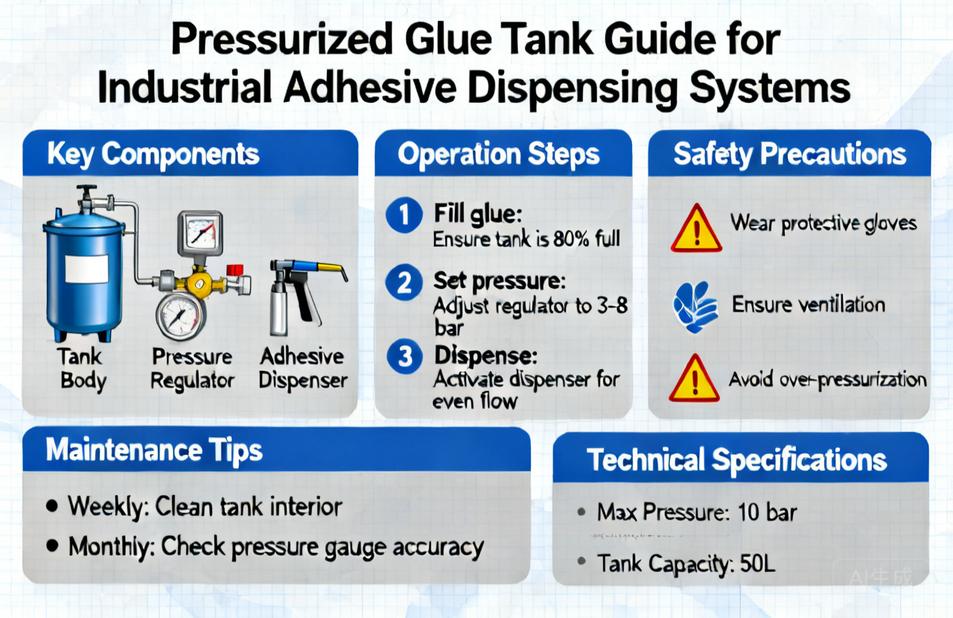
A pressurized glue tank is a sealed vessel that holds adhesive or other liquid material under controlled air pressure and feeds it to dispensing valves, guns, or nozzles at a steady flow. Instead of relying on gravity or manual pouring, the tank uses compressed air to push glue through a hose to the point of application. This makes it a practical choice for assembly lines, packaging operations, woodworking shops, and other industrial settings where consistent adhesive supply matters. Buyers searching for a pressurized glue tank often need to match the vessel to an existing dispensing system, so understanding how it works and what to check before ordering can prevent costly downtime.
How a Pressurized Glue Tank Works
Inside a typical unit, the tank body is filled with adhesive through a top opening. The lid is clamped or bolted shut to create an airtight seal. Compressed air enters through a regulator and builds pressure above the glue surface. That pressure forces the adhesive out through a dip tube or bottom outlet, along a hose, and into a dispensing valve. The operator adjusts the air regulator to control flow rate. A pressure relief valve and gauge help maintain safe operation, while a shut-off valve allows the tank to be isolated from the line.
Because the system is sealed, the adhesive is less exposed to air, which can slow skinning or curing for some materials. It also allows the tank to be mounted higher or lower than the application point, which is useful when floor space is tight. The design works with many fluid types, including water-based glues, solvent-based adhesives, and some hot melt or reactive materials, provided the tank materials and seals are compatible.
Key Features Buyers Look For
When evaluating a pressurized glue tank, procurement teams often focus on a few practical details. The tank body should be constructed from a material that resists corrosion and cleaning chemicals. Stainless steel is common for water-based and solvent-based adhesives, while carbon steel may suit certain non-corrosive fluids if properly coated. The lid seal and gasket material matter because they affect air retention and chemical compatibility. A well-designed unit includes an air pressure regulator, a pressure gauge, a safety relief valve, and a quick-release lid for fast refilling.
Other features that affect day-to-day use include the outlet size and type, the dip tube length, and the hose connection. Some tanks are designed with a bottom outlet to reduce dead space and improve drainage, which helps when switching between adhesive batches. Portable models may include casters or a carrying handle, while larger tanks are often stationary and plumbed into a fixed line. The number of tanks needed depends on adhesive consumption, shift length, and how frequently operators can refill without stopping production.
Materials and Construction Considerations
Material selection is not just about the tank shell. Wetted parts include the dip tube, outlet fitting, seals, and any internal coating. If the adhesive contains solvents or acidic components, standard seals may degrade quickly and cause leaks. Suppliers should be able to confirm which elastomers or PTFE components are suitable for the intended fluid. For food, medical, or cleanroom-adjacent applications, buyers may need documentation on surface finish and cleanability, though specific certifications should always be verified rather than assumed.
Welding quality and surface finish also influence service life. A smooth internal surface reduces adhesive buildup and makes cleaning easier. External welds should be uniform and free of porosity. For tanks used with moisture-sensitive adhesives, a sealed lid with a reliable gasket is essential. In high-vibration environments, the mounting base and fittings should be sturdy enough to avoid loosening over time.
Typical Industrial Applications
Pressurized glue tanks appear in many production environments. In packaging, they feed adhesive to carton sealing and case erecting equipment. In woodworking and furniture manufacturing, they supply glue to edge banders, dowel inserters, and profile wrapping machines. In automotive and aerospace assembly, they may deliver sealants or structural adhesives to robotic or manual dispensing stations. Electronics and appliance manufacturers use them for potting, gasketing, and bonding operations. Because the tank can be positioned away from the dispensing point, it is also useful in overhead or hard-to-reach applications.
Other users include label applicators, bookbinding lines, filter production, and nonwoven fabric assembly. In each case, the goal is the same: maintain a consistent adhesive supply so that bead size, coverage, and cycle time remain stable. When adhesive flow varies, product quality suffers, and operators may compensate by slowing the line or manually applying extra glue, both of which add cost.
How to Choose the Right Tank for Your System
Start with the adhesive. Check its viscosity, solids content, cure mechanism, and chemical composition. These factors determine the tank material, seal type, and whether agitation or heating is needed. Next, review the dispensing equipment. The tank outlet pressure must match the valve or gun requirements. If the valve needs a certain minimum pressure to open and close cleanly, the tank and regulator must be able to deliver it consistently. Hose length and diameter also affect pressure drop, so a long or narrow hose may require higher tank pressure or a different setup.
Consider production volume and refill frequency. A larger tank reduces refill interruptions but takes longer to pressurize and clean. A smaller tank is easier to handle and faster to change over, which can be an advantage in high-mix, low-volume production. Maintenance access is another factor. Quick-release lids, removable dip tubes, and accessible regulators save time during cleaning and troubleshooting. Finally, check the available compressed air supply. The tank must be compatible with the plant air pressure and quality; dirty or wet air can damage regulators and contaminate adhesive.
Customization and OEM Options
Many industrial buyers need a tank that fits an existing footprint or connects to a specific dispensing valve. Custom options often include tank size, outlet thread type, dip tube length, mounting brackets, and port configurations for gauges or sensors. Some suppliers offer OEM manufacturing, where the tank is built to a buyer’s drawing or branded for their product line. When discussing customization, provide the adhesive type, required flow rate, available air pressure, and connection details. A reliable manufacturer or supplier can then recommend a configuration that balances cost, lead time, and performance.
It is also worth asking about spare parts availability. Seals, gaskets, regulators, and dip tubes are wear items, and having a local or regional source for replacements reduces downtime. If the tank will be used in multiple locations, standardizing on one design can simplify training and spare parts inventory.
Supplier Selection and Buying Considerations
When comparing pressurized glue tank suppliers, look for experience with adhesive dispensing rather than general pressure vessels. A supplier who understands glue behavior can advise on outlet design, pressure control, and material compatibility. Ask for detailed specifications, dimensional drawings, and material certificates where applicable. Confirm the warranty terms and what is covered. If the tank is part of a larger system, ask whether the supplier can provide or recommend compatible hoses, valves, and fittings.
For custom or OEM projects, request a sample or prototype before committing to a full order when feasible. Review the supplier’s production capacity and quality control process. Communication is also important: clear responses to technical questions usually indicate a supplier who can support the product after the sale. Price matters, but the total cost of ownership includes reliability, maintenance, and the cost of production interruptions.
Frequently Asked Questions
Can a pressurized glue tank handle different types of adhesive?
It can handle many adhesives, but compatibility depends on the tank materials, seals, and the adhesive chemistry. Water-based, solvent-based, and some reactive adhesives may require different gaskets or surface finishes. Always confirm compatibility with the supplier before use.
How do I determine the right tank size for my production line?
Estimate adhesive consumption per shift, then choose a tank that reduces refill frequency without being too large to handle or clean. Consider changeover needs and available space. A smaller tank may be better for high-mix production.
Can I get a custom pressurized glue tank for my existing equipment?
Yes, many manufacturers offer custom sizes, outlet types, and mounting options. Provide your adhesive details, required pressure, and connection specifications so the supplier can propose a suitable design.
What maintenance does a pressurized glue tank require?
Regular checks include inspecting seals and gaskets, cleaning the tank and dip tube, verifying the pressure gauge and relief valve, and checking hoses for wear. Follow the supplier’s maintenance schedule and replace worn parts promptly.
Conclusion
Selecting a pressurized glue tank comes down to matching the vessel to the adhesive, the dispensing system, and the production environment. Focus on material compatibility, pressure control, refill and cleaning convenience, and the availability of spare parts. If your process requires a specific size, connection, or branding, discuss OEM or custom options with a qualified manufacturer or supplier. Sharing your application details helps them recommend a configuration that supports consistent adhesive flow and reliable operation.
