

Adhesive Storage Pressure Tank | A Practical Guide for Industrial Dispensing and Bulk Adhesive Supply
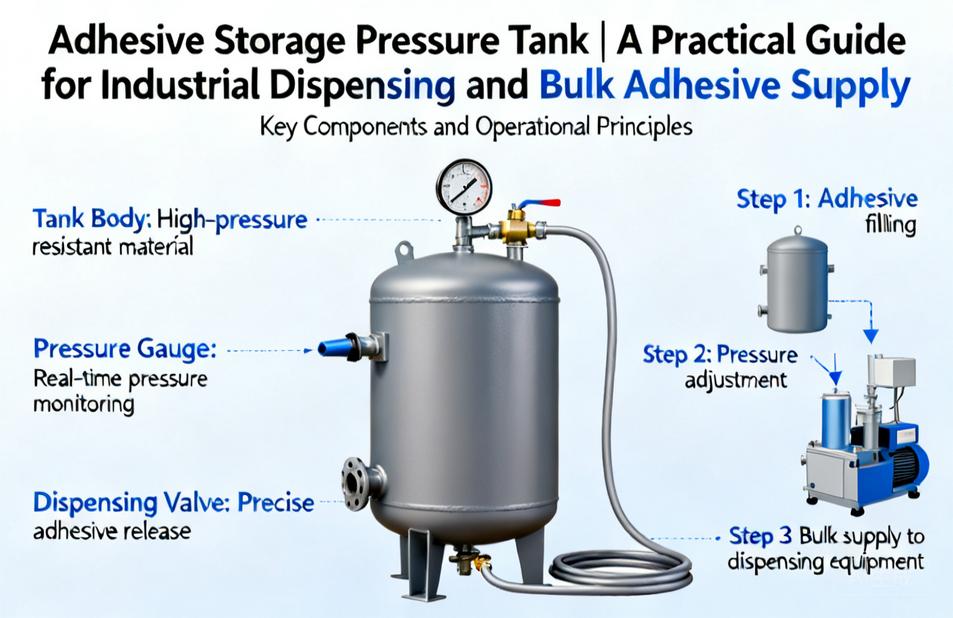
An adhesive storage pressure tank is a sealed vessel that holds liquid adhesives, sealants, or similar fluids under controlled air pressure so they can be delivered smoothly to dispensing valves, applicators, or production lines. Instead of manually refilling small cartridges or pails, manufacturers use a pressure tank to create a stable, continuous flow of adhesive from a central reservoir. This makes it a common choice in packaging, woodworking, automotive assembly, electronics, and general industrial bonding processes where consistent adhesive supply matters.
For overseas buyers, an adhesive storage pressure tank is not simply a container. It is part of a fluid delivery system that must match the adhesive chemistry, viscosity, production cycle, and downstream dispensing equipment. Choosing the right tank design affects material waste, operator safety, maintenance frequency, and overall process reliability.
What an Adhesive Storage Pressure Tank Does in a Dispensing System
In a typical setup, the tank is filled with adhesive and sealed. Compressed air or inert gas is introduced into the upper chamber, creating pressure on the adhesive surface. The pressurized adhesive then flows through an outlet line to a dispenser, nozzle, or robot-mounted applicator. When the dispensing valve opens, adhesive is released at a controlled rate. When it closes, the pressure remains in the tank, ready for the next cycle.
This principle is similar to other pressure vessels used for fluids, but adhesive storage tanks are designed with specific concerns in mind: adhesive viscosity, curing behavior, moisture sensitivity, and the need for easy cleaning. A well-matched tank helps reduce air pockets, inconsistent flow, and adhesive waste.
Typical Industrial Applications
Adhesive storage pressure tanks appear in many production environments where adhesives are consumed in volume. Common industrial applications include:
- Packaging and carton sealing, where hot melt or cold glue is applied continuously
- Woodworking and furniture assembly, using water-based or solvent-based adhesives
- Automotive interior bonding, gasketing, and structural sealing
- Electronics assembly, where precise adhesive beads are required
- Labeling and lamination lines that need a steady adhesive supply
- General bonding stations in metalworking, appliance, and building material production
In each case, the tank acts as a buffer between bulk adhesive containers and the point of application. It can reduce downtime caused by frequent refilling and help maintain a more consistent bead or spray pattern.
Key Design Features Buyers Should Review
When evaluating an adhesive storage pressure tank, buyers should look beyond general tank specifications. Several design details directly affect performance and service life.
Material and Construction
Tanks are commonly made from stainless steel or carbon steel with protective coatings. Stainless steel is often preferred for water-based adhesives or environments where corrosion resistance is important. Internal surfaces should be smooth and compatible with the adhesive to prevent buildup. Weld quality, port placement, and seal design all influence cleanliness and pressure retention.
Pressure Control and Safety
A reliable tank includes a pressure regulator, gauge, safety relief device, and appropriate inlet and outlet connections. The working pressure must be suitable for the adhesive and the downstream dispenser. Safety features should be matched to the intended operating range, and any tank should be used within its rated limits.
Filling and Cleaning Access
Large lid openings, removable inner liners, or quick-release clamps can make filling and cleaning faster. Adhesives that cure or skin over time require regular maintenance, so easy access is a practical advantage. Some tanks are designed for bag-in-box or liner systems to reduce direct contact with the adhesive.
Level Monitoring and Refill Options
Optional level sensors, low-level alarms, and automatic refill systems help maintain continuous production. For high-volume lines, an automatic refill from a drum or tote can reduce manual handling and improve workplace safety.
How to Choose the Right Tank for Your Adhesive
Selecting an adhesive storage pressure tank starts with the adhesive itself. Water-based, solvent-based, hot melt, epoxy, polyurethane, and silicone adhesives behave differently. Viscosity, pot life, curing speed, and chemical compatibility all influence tank material, seal type, and cleaning method.
Next, consider the dispensing demand. The tank size should support a reasonable production run without excessive refilling, but it should also fit the available floor space and lifting equipment. Outlet size, hose length, and pressure drop between the tank and dispenser must be reviewed together with the valve or pump at the point of use.
Buyers should also confirm how the tank will be integrated with existing equipment. Mounting options, port orientation, and control signals for level or pressure monitoring can affect installation time. If the tank will be used in a hazardous area or with flammable solvents, the electrical components and grounding requirements need special attention.
Customization and OEM Options
Many industrial adhesive storage pressure tanks are available with customization options to suit specific production lines. Common custom requirements include special tank volumes, alternative port configurations, sanitary connections, agitators, heating or cooling jackets, and mobile cart mounting. OEM and custom manufacturing allow buyers to match the tank to a particular adhesive, robot cell, or dispensing controller.
When discussing customization with a manufacturer or supplier, provide details about the adhesive type, required flow rate, available air pressure, floor space, and cleaning routine. Clear communication helps the factory propose a practical configuration rather than a generic tank that may need later modification.
Buying Considerations for Overseas Procurement
Price is only one part of the total cost. Buyers should compare material quality, replaceable parts, documentation, and after-sales support. A tank that is difficult to clean or service can increase downtime and labor costs over time. Spare seals, pressure regulators, and level sensors should be easy to source.
It is also important to verify that the supplier understands adhesive behavior and dispensing systems, not just pressure vessel fabrication. A supplier with experience in fluid handling can often suggest practical improvements for filling, venting, and line routing.
How to Select a Reliable Supplier or Manufacturer
When sourcing an adhesive storage pressure tank, look for a manufacturer or supplier with relevant experience in industrial fluid delivery and dispensing equipment. Review their product range, customization capability, and technical communication. Ask for drawings, material specifications, and operating instructions. If possible, request references from similar industrial applications, but always verify details independently.
A factory that offers OEM and custom fabrication can be an advantage when standard tanks do not fit your process. However, customization should be based on a clear specification and a realistic understanding of the adhesive and production environment.
Frequently Asked Questions
Can an adhesive storage pressure tank handle high-viscosity adhesives?
It depends on the tank design, outlet size, and pressure available. Higher viscosity usually requires larger passages and sufficient pressure to move the adhesive to the dispenser. The supplier should review viscosity and flow requirements before recommending a configuration.
Is a stainless steel tank always better than a coated carbon steel tank?
Not always. Stainless steel offers corrosion resistance and easy cleaning, which suits many water-based adhesives. Coated carbon steel can be acceptable for certain solvent-based or non-corrosive adhesives if the coating is compatible and maintained. The decision should be based on adhesive chemistry and operating conditions.
How do I know what tank size to choose?
Tank size depends on adhesive consumption per shift, available space, refill frequency, and material handling. A smaller tank may be easier to clean and move, while a larger tank reduces refill interruptions. Buyers should calculate typical usage and discuss options with the supplier.
Can the tank be integrated with an existing dispensing robot or valve?
Yes, in many cases. The tank outlet, pressure range, and control signals need to match the downstream equipment. Providing details about the existing dispenser or robot helps the manufacturer recommend suitable connections and accessories.
Conclusion
An adhesive storage pressure tank is a practical solution for maintaining consistent adhesive supply in industrial dispensing systems. The right choice depends on adhesive type, viscosity, production volume, cleaning needs, and how the tank will connect to existing equipment. Buyers should focus on material compatibility, pressure control, service access, and supplier experience rather than specifications alone.
If you are evaluating options for your production line, contact a qualified manufacturer or supplier to discuss your adhesive, application, and customization requirements. A clear technical conversation can help you select a tank that supports reliable dispensing and efficient maintenance.
