

Fluid Pressure Vessel Selection Guide for Industrial Buyers | Features, Applications, and Customization
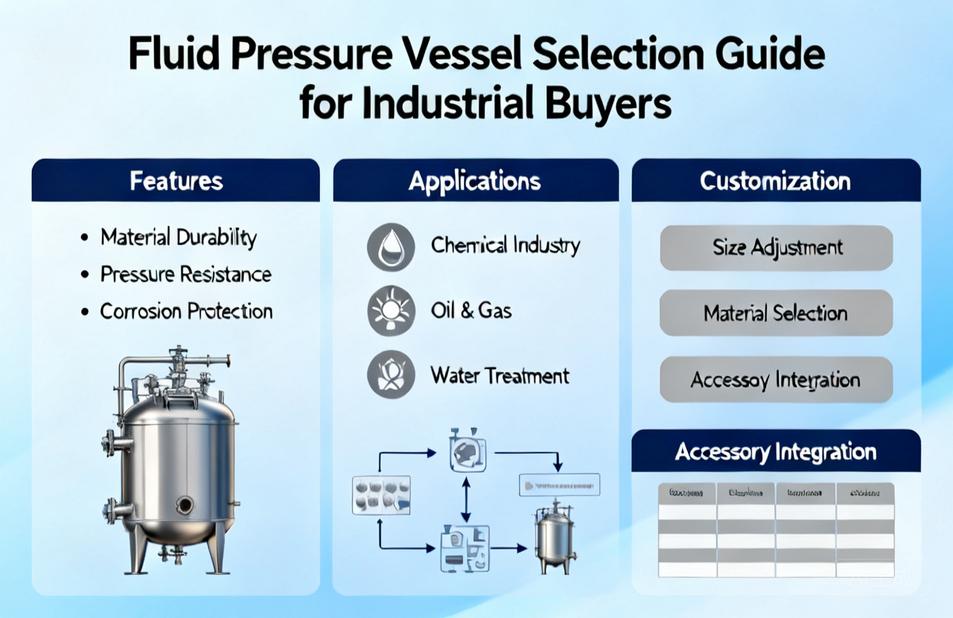
A fluid pressure vessel is a sealed container designed to hold liquids or gases at pressures different from ambient conditions, commonly used in processing, storage, and transport systems across industries such as chemical, oil and gas, food and beverage, and water treatment. For overseas procurement teams, understanding how these vessels work, what materials and configurations are available, and how to match them to specific industrial applications is essential for safe and efficient operations. This guide provides practical insights for buyers sourcing fluid pressure vessels from a manufacturer or supplier, covering key selection factors, customization options, and supplier evaluation criteria.
What Is a Fluid Pressure Vessel and How Does It Work?
A fluid pressure vessel is essentially a containment unit that maintains internal pressure above or below atmospheric levels. It may serve as a storage tank, a reactor, a separator, or a buffer in a process line. The vessel works by withstanding the internal pressure exerted by the contained fluid, relying on its geometry, wall thickness, and material properties to prevent deformation or failure. Depending on the application, pressure vessels may be equipped with valves, gauges, safety relief devices, and internal components such as baffles, trays, or heating coils.
In industrial settings, fluid pressure vessels are often part of a larger system that includes pumps, compressors, piping, and instrumentation. The vessel’s design must consider operating pressure, temperature, corrosion resistance, and the nature of the fluid—whether it is a liquid, gas, or multiphase mixture. Buyers should note that pressure vessels are typically designed and fabricated according to recognized codes and standards, but specific compliance requirements depend on the country and industry. When requesting quotations, it is advisable to specify the applicable codes and any third-party inspection requirements.
Key Features and Construction Considerations
Fluid pressure vessels vary widely in size, shape, and complexity. Common types include cylindrical vessels with dished heads, spherical vessels for high-pressure service, and rectangular or custom geometries for space-constrained installations. Key features to evaluate include:
- Pressure rating: The maximum allowable working pressure (MAWP) should be specified based on system requirements, but buyers must verify that the vessel design and material can safely handle it.
- Temperature range: Operating temperature affects material selection and may require insulation or cooling/heating provisions.
- Corrosion resistance: The choice of material—such as carbon steel, stainless steel, or exotic alloys—depends on the fluid’s corrosiveness and the environment.
- Ports and connections: Inlet, outlet, drain, vent, and instrument connections must match existing piping and instrumentation.
- Internal components: Baffles, distributors, or mist eliminators can be added to improve separation or mixing performance.
From a manufacturing perspective, the vessel’s construction involves forming, welding, heat treatment, and non-destructive testing. A reputable factory will provide documentation for these processes, although specific certifications should be requested as needed. Buyers should also consider the method of support—whether the vessel will be skid-mounted, leg-supported, or installed on a foundation.
Industrial Applications of Fluid Pressure Vessels
Fluid pressure vessels serve critical roles in numerous industrial applications. In the chemical and petrochemical industry, they are used for reactions, separation, and storage of volatile or hazardous fluids. In the food and beverage sector, stainless steel pressure vessels are common for carbonation, fermentation, and sanitary processing. Water treatment plants use pressure vessels for filtration, softening, and reverse osmosis systems. Oil and gas operations rely on pressure vessels for separation of oil, gas, and water, as well as for metering and surge control. Other applications include pharmaceutical manufacturing, power generation, and HVAC systems.
When matching a fluid pressure vessel to an application, buyers should consider the process conditions, available space, and integration with existing equipment. For example, a vessel used in a continuous process may need to handle fluctuating flow rates, while a batch process might require frequent opening and cleaning. The intended service life and maintenance schedule also influence material and design choices.
How to Choose the Right Fluid Pressure Vessel
Selecting a fluid pressure vessel involves a systematic evaluation of technical and commercial factors. Start by defining the process requirements: fluid type, pressure, temperature, flow rate, and any special conditions such as corrosive or abrasive media. Next, determine the required volume and dimensions based on residence time or storage capacity. Consider the available installation space and the need for future expansion. Material selection should balance corrosion resistance, strength, and cost; for instance, stainless steel grades offer good corrosion resistance for many fluids, while higher alloys may be needed for aggressive chemicals.
Compliance with local and international codes is non-negotiable. Buyers should confirm that the manufacturer can design and fabricate to recognized standards and provide the necessary documentation, such as material certificates and test reports. It is also wise to evaluate the manufacturer’s experience with similar applications and their ability to offer engineering support. For customized solutions, early involvement of the vessel supplier in the project can help optimize design and avoid costly revisions.
Customization and OEM Options
Many fluid pressure vessel manufacturers offer customization and OEM services to meet specific project needs. Customization can include non-standard dimensions, special materials, additional nozzles, internal coatings, and integrated controls. OEM arrangements allow buyers to private-label the vessel or incorporate proprietary design features. When discussing customization, provide detailed specifications and sketches, and clarify expectations regarding design responsibility, testing, and documentation. A capable supplier will work with your engineering team to develop a vessel that fits your system without compromising safety or performance.
Buying Considerations and Supplier Selection
When sourcing fluid pressure vessels, price is only one factor. Evaluate the supplier’s technical expertise, manufacturing capabilities, quality control processes, and track record. Request references or examples of similar projects, but avoid relying solely on testimonials. Instead, ask about their design and fabrication procedures, inspection and testing methods, and how they handle non-conformities. A factory with in-house engineering and welding capabilities can often provide better lead times and consistency. Also, consider logistics: large vessels may require special transport arrangements, so discuss shipping and packaging early. Finally, clarify warranty terms, spare parts availability, and after-sales support.
Frequently Asked Questions
How do I determine the correct pressure rating for my fluid pressure vessel?
The pressure rating should be based on the maximum pressure the system can generate, including any surge or upset conditions. Consult with your process engineer and the vessel manufacturer to establish the design pressure. The manufacturer will then design the vessel wall thickness and select materials accordingly.
Can fluid pressure vessels be customized for my specific application?
Yes, most manufacturers offer custom designs to accommodate unique fluids, space constraints, or integration requirements. Provide detailed specifications and discuss your application with the supplier’s engineering team to develop a suitable solution.
What documentation should I expect from a pressure vessel supplier?
Depending on the applicable codes and your requirements, the supplier should provide design calculations, material certificates, welding records, non-destructive test reports, and as-built drawings. Clarify documentation needs before placing an order.
How do I choose between a standard and a custom fluid pressure vessel?
Standard vessels are cost-effective when your requirements match available options. If your process conditions or space are unusual, a custom vessel may be necessary to ensure safety and performance. Evaluate total cost, lead time, and engineering support before deciding.
Conclusion
Selecting the right fluid pressure vessel requires a clear understanding of your process needs, applicable codes, and the capabilities of your supplier. Focus on material compatibility, design pressure, and customization options that align with your industrial application. Whether you need a standard vessel or a fully customized solution, working with an experienced manufacturer that offers OEM services can streamline your procurement. For specific specifications, application reviews, or customization inquiries, contact a qualified supplier to discuss your project requirements.
