

Dispensing Pressure Vessel | A Buyer’s Guide for Industrial Fluid and Adhesive Systems
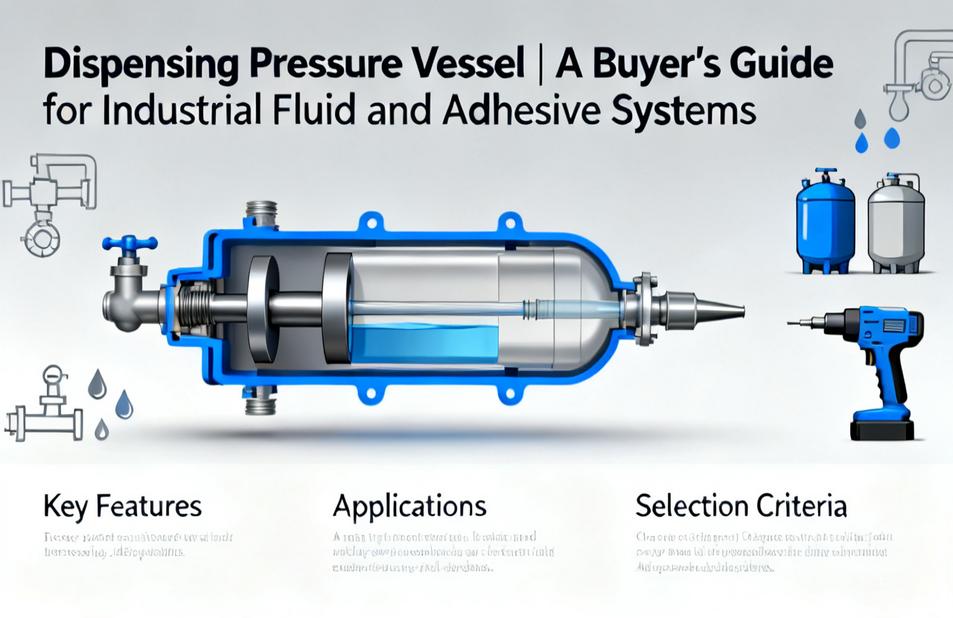
A dispensing pressure vessel is a closed container that holds liquid or semi-liquid material under controlled air or gas pressure and delivers it to a dispensing valve, nozzle, or applicator at a steady, repeatable flow. In industrial settings, it is commonly used for adhesives, sealants, lubricants, inks, coatings, solvents, and other fluids that must be applied with consistency. Whether you operate a manual workstation or a fully automated production line, the pressure vessel often sits at the center of the fluid delivery system, influencing bead quality, cycle time, and material waste.
What a Dispensing Pressure Vessel Does
Unlike a simple storage tank, a dispensing pressure vessel is designed to maintain pressure on the material so that it reaches the point of application without pulsation or interruption. The vessel is typically connected to a regulated air supply. When pressurized, the material is pushed through an outlet to a dispense valve. The operator or control system opens the valve for a set time or at a set rate, and a consistent amount of material is released.
For low- to medium-viscosity fluids, this method is straightforward. For thicker adhesives or pastes, the vessel may be paired with a follower plate or pump to improve flow and reduce waste. The key advantage is that the material stays enclosed, protected from moisture, contamination, and air pockets, which is important when using moisture-curing adhesives or reactive resins.
Key Features Buyers Look For
When evaluating a dispensing pressure vessel, overseas buyers often focus on pressure control, material compatibility, and ease of cleaning. A well-designed vessel should have a reliable pressure regulator, a secure lid closure, and a clear pressure gauge. Quick-release clamps and smooth internal surfaces help reduce changeover time between materials.
Other practical features include:
- Adjustable pressure range to suit different viscosities
- Level sensors or low-material alarms for automated lines
- Multiple outlet configurations for multi-nozzle dispensing
- Portable or floor-mounted options depending on the workspace
- Compatibility with air, nitrogen, or other inert gases
These features matter because they affect repeatability, operator safety, and maintenance costs. A vessel that is difficult to clean or refill can slow down production and increase downtime.
Materials and Construction
Stainless steel is a common choice for dispensing pressure vessels because it resists corrosion and is easy to clean. Grade 304 and 316 stainless steel are frequently specified, with 316 offering better resistance to certain chemicals and harsh environments. Some vessels use carbon steel with an internal coating, but this depends on the material being dispensed and the required hygiene level.
Seals and gaskets are equally important. They must be compatible with the fluid, the cleaning agents, and the operating temperature. Common seal materials include PTFE, Viton, and EPDM. Buyers should confirm that all wetted parts are suitable for their specific adhesive, solvent, or coating.
Industrial Applications
Dispensing pressure vessels serve many industries. In electronics manufacturing, they feed solder paste, conformal coatings, and potting compounds. In automotive assembly, they supply adhesives for trim, gaskets, and structural bonding. Packaging lines use them for glues and hot-melt alternatives. Aerospace and medical device production also rely on them for precise application of sealants and encapsulants.
Other industrial applications include woodworking, furniture assembly, filter production, and general product assembly. In each case, the vessel must match the material characteristics, production speed, and environmental conditions.
How to Choose the Right Dispensing Pressure Vessel
Choosing the correct vessel starts with the material. Viscosity, chemical composition, and pot life determine the required pressure range, outlet size, and seal material. Next, consider the dispensing method. Time-pressure dispensing, volumetric dispensing, and spray valves each have different requirements for pressure stability and flow control.
Production volume and automation level also matter. A manual cell may need only a small portable vessel, while a high-speed automated line may require a larger vessel with level feedback and remote pressure adjustment. Space constraints, refill frequency, and cleaning procedures should be reviewed early in the selection process.
Finally, check the vessel’s pressure rating and safety features. It should be designed and tested according to relevant engineering standards, though specific certifications depend on the manufacturer and region. Buyers should request documentation for the pressure boundary and relief devices.
Customization and OEM Options
Many suppliers offer custom and OEM dispensing pressure vessels to fit specific equipment or process requirements. Customization may include special tank sizes, outlet port locations, mounting brackets, and control interfaces. OEM programs can provide private-label vessels or integrated assemblies that match an existing dispenser or robot.
When requesting a custom solution, provide detailed information about the material, pressure range, duty cycle, and connection types. A reliable manufacturer or supplier will review these details and recommend a configuration that balances performance, safety, and cost.
Buying Considerations and Supplier Selection
Price is only one factor. Total cost of ownership includes maintenance, spare parts, and downtime. A vessel that is easy to service and supported by readily available seals and components can be more economical over time.
When evaluating a supplier, look for experience in fluid handling and dispensing systems. Ask about their quality control process, material traceability, and after-sales support. If you need a custom or OEM solution, confirm their engineering capabilities and production capacity. A factory with in-house machining and assembly can often respond faster to special requests.
Request drawings, material certificates, and test reports where applicable. Avoid suppliers who cannot provide clear technical documentation or who make unsupported claims about performance.
Frequently Asked Questions
What is the difference between a pressure vessel and a pressure tank for dispensing?
In practice, the terms are often used interchangeably. A dispensing pressure vessel is specifically configured for fluid delivery, with ports and fittings suited to a dispense valve or hose. A general pressure tank may be used for storage or other purposes. Buyers should confirm the intended use and outlet configuration.
Can I use a dispensing pressure vessel with high-viscosity adhesives?
Yes, but the vessel may need a follower plate or a pump to assist flow. The pressure range, outlet size, and material path should be selected based on the adhesive viscosity and required flow rate. Consult the supplier for the best configuration.
What information do I need to provide for a custom pressure vessel?
Provide the material type, viscosity, required pressure, flow rate, connection sizes, available space, and automation interface. If you have an existing dispenser or robot, share the mounting details and control signals. This helps the manufacturer design a vessel that fits your system.
How do I maintain a dispensing pressure vessel?
Regularly inspect seals, gaskets, and pressure gauges. Clean the vessel according to the material manufacturer’s recommendations. Replace worn parts promptly to prevent leaks or pressure loss. Keep a spare parts kit for critical components.
Conclusion
Selecting a dispensing pressure vessel requires a clear understanding of your material, process, and production environment. Focus on pressure control, material compatibility, cleaning, and safety. Consider custom or OEM options if standard vessels do not fit your equipment. By working with an experienced manufacturer or supplier, you can specify a vessel that improves dispensing accuracy and reduces waste. For detailed specifications, application support, or customization requests, contact a qualified supplier and share your requirements.
