

Industrial Glue Tank | A Practical Guide for B2B Buyers and OEM Projects
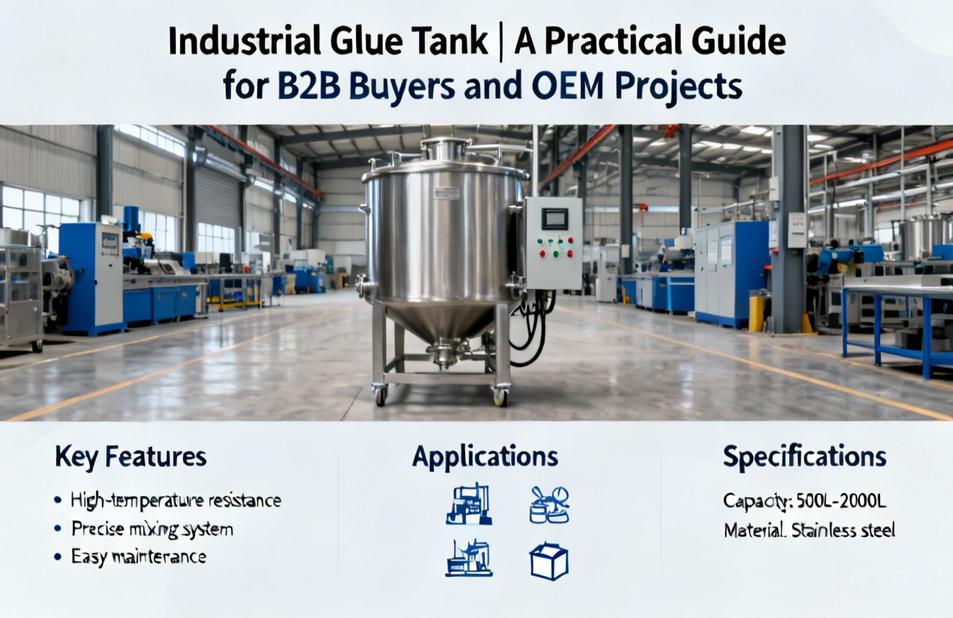
An industrial glue tank is a pressure vessel or heated reservoir used to store, condition, and feed adhesive to dispensing equipment in automated production lines. It is commonly found in packaging, woodworking, automotive assembly, electronics, and nonwoven applications where consistent adhesive supply is critical. Unlike small cartridges or hand-held glue guns, an industrial glue tank is designed for continuous operation, larger volume, and integration with pumps, hoses, and dispensing valves. For overseas buyers, understanding how these tanks work and how to match them to a process is the first step toward a reliable purchase.
What an Industrial Glue Tank Does in a Dispensing System
In a typical adhesive system, the glue tank acts as the central supply source. It holds hot melt, cold glue, or specialty adhesives and maintains the material at a stable temperature and pressure. The tank connects to a pump or pressure regulator, which pushes adhesive through heated hoses to dispensing heads, nozzles, or rollers. This setup allows multiple application points to receive adhesive from one reservoir, reducing refill frequency and improving line efficiency. Depending on the adhesive type, the tank may include agitation, filtration, level sensing, or insulation to prevent curing or separation. A well-matched industrial glue tank keeps adhesive viscosity stable, which directly affects bead size, open time, and bond strength.
Key Features Buyers Look For
When evaluating an industrial glue tank, buyers often focus on capacity, heating method, pressure rating, and material compatibility. Capacity is usually selected based on adhesive consumption per hour and the acceptable refill interval. Heating can be electric, oil-jacketed, or water-jacketed, and the choice depends on the adhesive chemistry and required temperature uniformity. Pressure rating must match the pump and dispensing valves, while wetted materials such as stainless steel or coated carbon steel must resist corrosion and adhesive buildup. Other practical features include removable lids for cleaning, insulation to reduce energy loss, and ports for temperature sensors and level controls. These details influence maintenance cost and production uptime more than a single specification.
Materials and Construction
Most industrial glue tanks are built from stainless steel, carbon steel, or aluminum, with stainless steel being common in applications where corrosion resistance and easy cleaning are important. Internal surfaces are often polished to reduce adhesive residue and simplify changeovers. The tank body may be insulated with rock wool or foam and covered with a protective shell. Seals, gaskets, and fittings must be compatible with the adhesive and operating temperature. For hot melt systems, the tank and associated hoses are typically heated to keep the adhesive in a liquid state. For cold glue or water-based adhesives, the tank may be designed for ambient temperature with agitation to prevent settling. Buyers should confirm that all wetted parts match the adhesive supplier recommendations.
Typical Industrial Applications
Industrial glue tanks serve a wide range of manufacturing processes. In packaging, they supply adhesive to case sealers, carton erectors, and tray formers. In woodworking, they feed edge banding and profile wrapping lines. In automotive, they support interior trim bonding and assembly operations. In electronics, smaller tanks may be used for precise adhesive dispensing on circuit boards and components. Nonwoven and hygiene production lines use glue tanks for laminating and construction adhesives. Because each application has different adhesive chemistry, temperature, and duty cycle, the tank design is often customized rather than selected from a standard catalog. This is why working with an experienced manufacturer or supplier early in the project saves time and reduces integration risk.
How to Choose the Right Tank for Your Line
Choosing an industrial glue tank starts with the adhesive. Identify whether it is hot melt, water-based, solvent-based, or a two-component system, then confirm the required temperature range and viscosity. Next, estimate the maximum adhesive consumption per hour and the desired refill interval. This determines tank capacity. Then review the dispensing equipment: pump type, hose length, number of dispensing points, and pressure requirements. The tank must be able to supply enough pressure and flow without starving the farthest valve. Consider the working environment as well, including ambient temperature, humidity, and cleanliness requirements. Finally, plan for maintenance access, cleaning procedures, and spare parts availability. A tank that is easy to service will reduce downtime over its lifetime.
Customization and OEM Options
Many industrial glue tank projects require customization because standard sizes rarely match every line layout. Custom options may include tank dimensions, port positions, heating zones, agitation, insulation thickness, and control interfaces. OEM manufacturing is common in this sector, where a buyer provides specifications or a sample and the factory builds to match. When discussing a custom tank, prepare a clear specification sheet covering adhesive type, temperature, pressure, capacity, connection sizes, and control signals. If your line uses a specific PLC or communication protocol, include that as well. A reliable OEM partner will review the specification, suggest practical improvements, and provide drawings for approval before production.
Buying Considerations for Overseas Procurement
International buyers should evaluate more than the unit price. Ask about the manufacturer’s experience with similar adhesives and applications, since adhesive behavior varies significantly. Review the proposed materials, heating method, and control system against your process requirements. Confirm that the supplier can provide spare parts, technical documentation, and remote support. For custom or OEM orders, clarify the approval process, inspection criteria, and packaging for sea or air freight. It is also useful to discuss installation and commissioning support, especially if your team is unfamiliar with the tank design. A supplier that communicates clearly during the quotation stage is more likely to support you after delivery.
Supplier Selection: What Matters Most
A good industrial glue tank supplier understands both the equipment and the adhesive process. Look for a factory that can show experience in your industry and offers engineering support, not just sales. Ask how they handle custom requirements, what quality checks are performed before shipment, and how they manage spare parts. If possible, request references from similar applications without expecting confidential client details. Communication is also a practical indicator: suppliers who ask detailed questions about your adhesive and dispensing setup are usually better prepared to deliver a working solution. Price is important, but total cost of ownership, including maintenance and downtime, deserves equal attention.
Frequently Asked Questions
Can an industrial glue tank be used with different types of adhesive?
In many cases, yes, but the tank must be compatible with the adhesive chemistry, temperature, and cleaning requirements. Switching between adhesives may require different seals, heating settings, or cleaning procedures. Always confirm compatibility with the tank manufacturer and your adhesive supplier.
How do I determine the right tank capacity?
Capacity depends on your hourly adhesive consumption and the refill interval you can accept. Calculate the maximum usage per hour, multiply by the desired refill time, and add a reasonable safety margin. Also consider the physical space available on your production floor.
Is OEM or custom manufacturing available for glue tanks?
Yes, many factories offer OEM and custom fabrication. You can specify dimensions, heating method, ports, controls, and materials. Providing a detailed specification sheet or sample helps the manufacturer deliver a tank that fits your line.
What support should I expect from a supplier?
Support may include technical consultation, drawings, spare parts, installation guidance, and troubleshooting. The exact scope varies by supplier, so clarify these points before placing an order, especially for overseas projects.
Conclusion
Selecting an industrial glue tank is a process of matching adhesive properties, production demands, and dispensing equipment. Focus on capacity, heating, pressure, materials, and maintenance access. For custom or OEM projects, clear specifications and early supplier involvement reduce integration problems. If you are sourcing for a new line or replacing an existing tank, contact a qualified manufacturer or supplier to discuss your application, review customization options, and request a specification-based quotation.
