

Industrial Adhesive Tank | A Complete Guide for B2B Buyers and System Integrators
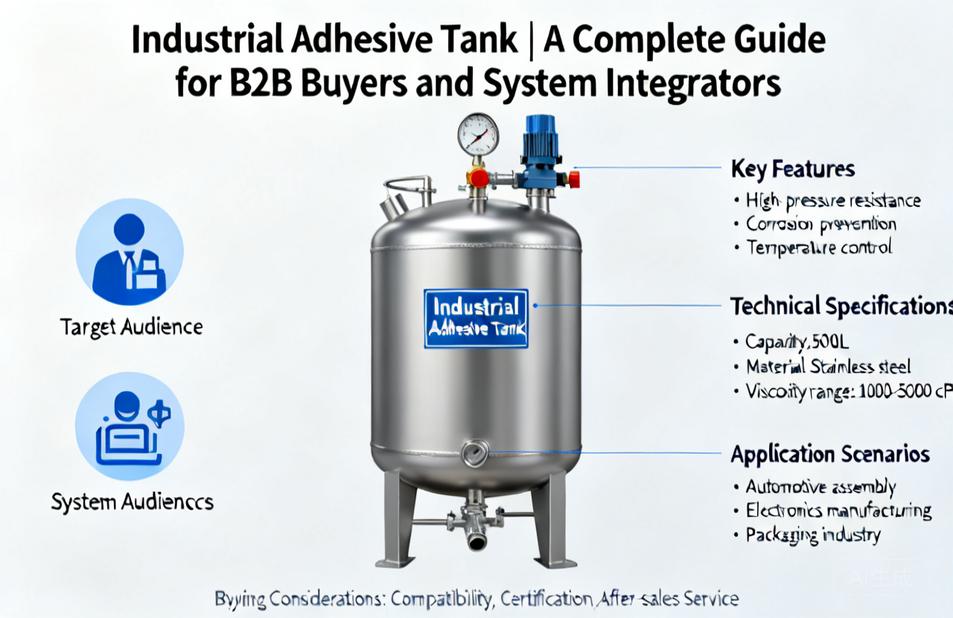
An industrial adhesive tank is a specialized pressure vessel used to store, condition, and supply adhesives, sealants, and other high-viscosity fluids to dispensing equipment in automated production lines. Unlike general-purpose storage tanks, these vessels are designed to handle the unique flow characteristics of glues, silicones, polyurethanes, and epoxy resins while maintaining consistent pressure and temperature for precise application. Whether you are equipping a furniture assembly line, an automotive bonding station, or a packaging operation, selecting the right adhesive tank directly affects dispensing accuracy, material waste, and overall production efficiency.
What Makes an Industrial Adhesive Tank Different from Standard Tanks?
Adhesives are not simple liquids. Many are shear-sensitive, moisture-curing, or highly viscous, which means they cannot be pumped or stored like water or solvents. An industrial adhesive tank is engineered with features that address these challenges. Common designs include pressure tanks that use compressed air to push material through hoses, follower plate tanks that minimize air exposure for moisture-sensitive adhesives, and heated tanks that maintain temperature to keep viscosity within a workable range. The tank may be a standalone unit or integrated into a larger dispensing system with pumps, regulators, and controls.
Key Components and Construction Features
The construction of an adhesive tank reflects the demands of the material it handles. Typical components include a pressure vessel body, a sealed lid with gasket, an air inlet and pressure regulator, a material outlet, and often a level sensor or agitator. Materials of construction vary: carbon steel with internal coatings, stainless steel 304 or 316, and sometimes aluminum for lighter-duty applications. Stainless steel is common when corrosion resistance or easy cleaning is required. Buyers should specify the adhesive chemistry, operating temperature range, and required pressure when requesting a quote from a manufacturer. Because adhesives can cure or separate, tanks may include agitation or recirculation ports to keep the material homogeneous.
How an Industrial Adhesive Tank Works in a Dispensing System
In a typical setup, the tank is filled with adhesive, sealed, and pressurized with dry compressed air or nitrogen. The pressure forces the adhesive through a heated hose to a dispensing valve or robot. A follower plate may sit on top of the adhesive to prevent air pockets and ensure smooth flow as the level drops. For two-component adhesives, separate tanks may feed a metering and mixing unit. The tank pressure, hose temperature, and valve timing are coordinated to deliver consistent beads or dots. Understanding this workflow helps buyers match tank capacity, pressure rating, and outlet configuration to their existing pumps and controllers.
Industrial Applications and Industries Served
Industrial adhesive tanks serve a wide range of sectors. In automotive assembly, they supply structural adhesives for body panels and hem flanges. In furniture manufacturing, they feed hot melt and water-based adhesives for edge banding and laminating. Electronics producers use them for potting compounds and conformal coatings. Packaging lines rely on them for carton sealing and label application. Other applications include aerospace bonding, wind blade assembly, appliance manufacturing, and construction panel lamination. Each application may require different tank features, such as high pressure for long hose runs, heating for hot melt adhesives, or stainless steel for water-based formulations.
How to Choose the Right Adhesive Tank for Your Process
Selecting an adhesive tank involves several practical considerations. First, identify the adhesive type and its properties: viscosity, cure mechanism, solids content, and sensitivity to moisture or temperature. Second, determine the required pressure and flow rate based on your dispensing valve and hose length. Third, consider capacity: a larger tank reduces refill frequency but may require more floor space and longer heating times. Fourth, evaluate the material of construction for compatibility and cleaning needs. Fifth, check the outlet size and type to match your pump or hose fittings. Finally, review control options: manual regulators, digital pressure displays, level sensors, and alarm outputs can improve process reliability.
Customization and OEM Options
Many adhesive tank suppliers offer customization to fit specific production requirements. Custom options may include special tank volumes, alternative port locations, agitation systems, heating jackets, insulation, and different surface finishes. OEM partnerships allow equipment builders to integrate tanks under their own branding or with specific mounting configurations. When discussing a custom build, provide detailed drawings or specifications, including adhesive characteristics, operating pressure, temperature range, and available utilities. A capable manufacturer will review material compatibility and suggest design adjustments to avoid dead zones or curing issues.
Buying Considerations for Overseas Procurement
International buyers should verify that the tank meets relevant pressure vessel standards for their region, though specific certifications depend on the supplier and destination. Request material certificates for wetted parts and confirm that seals and gaskets are compatible with the adhesive. Consider shipping and packaging: tanks are bulky and may require crating. Spare parts availability, such as gaskets and follower plates, should be discussed upfront. It is also wise to ask for a recommended spare parts list and maintenance schedule. Payment terms, warranty, and technical support across time zones are other factors that influence total cost of ownership.
How to Evaluate an Industrial Adhesive Tank Supplier
Finding a reliable supplier goes beyond price comparison. Look for a manufacturer with experience in adhesive handling and dispensing systems, not just general tank fabrication. Ask for references in your industry, if available, and review their engineering capabilities. A good supplier will ask detailed questions about your application before recommending a model. They should provide clear drawings, material specifications, and operating manuals. If you need OEM or custom work, confirm their design and production capacity. Communication responsiveness during the inquiry stage often indicates the level of support you can expect after delivery.
Frequently Asked Questions
What is the difference between a pressure tank and a follower plate tank for adhesives?
A pressure tank uses compressed air to push adhesive out through an outlet, and it may or may not have a follower plate. A follower plate tank is designed with a plate that sits directly on the adhesive surface, which helps minimize air entrapment and material waste, especially for high-viscosity or moisture-sensitive adhesives. Some tanks combine both features.
Can an industrial adhesive tank be heated?
Yes, many tanks are available with heating options such as electric jackets or water-heated coils. Heating is used to lower viscosity for pumping and dispensing, or to maintain a specific application temperature. The required temperature range depends on the adhesive chemistry and process requirements.
How do I determine the right tank capacity for my production line?
Capacity depends on your adhesive consumption rate, refill logistics, and available floor space. Calculate the maximum adhesive usage per shift or per day, then choose a tank that minimizes downtime without excessive material sitting idle. For moisture-sensitive adhesives, smaller tanks with frequent refills may be preferable.
Can I get a custom adhesive tank with specific port locations and controls?
Many manufacturers offer custom fabrication, including port placement, outlet sizes, level sensors, and control interfaces. Provide detailed specifications and adhesive properties when requesting a quote. OEM options are also commonly available for equipment builders.
Conclusion
Choosing an industrial adhesive tank is a decision that affects dispensing quality, maintenance, and operating costs. Focus on material compatibility, pressure and temperature requirements, capacity, and customization needs. Work with a supplier who understands adhesive behavior and can support your integration. If you are evaluating options for a new line or upgrading an existing system, contact a qualified manufacturer to discuss your specifications, application details, and any OEM or custom requirements. A well-matched tank will contribute to a smoother, more reliable production process.