

Glue Dispensing Tank Manufacturer | A Practical Guide for Industrial Buyers
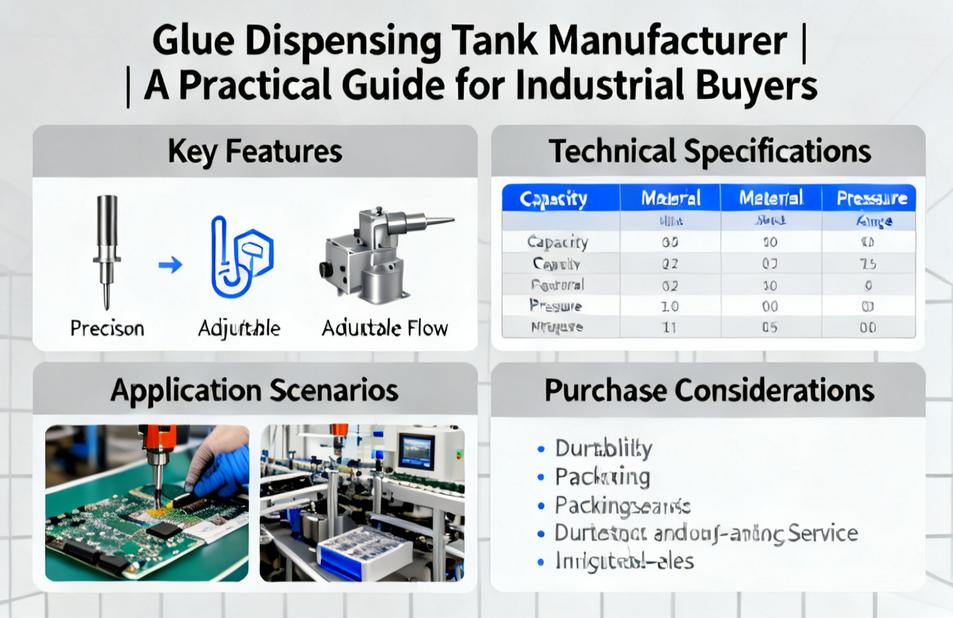
Working with a qualified glue dispensing tank manufacturer is essential when adhesive quality and repeatable output matter in your production line. A glue dispensing tank is a pressure vessel that stores and feeds liquid adhesives, sealants, or other flowable media to dispensing valves, robots, or manual applicators. It typically uses regulated air pressure to push material from the tank through a hose to the point of application, providing a steady supply without manual refilling for every cycle. These tanks are common in automotive assembly, electronics potting, furniture edge banding, packaging, and general industrial bonding where consistent adhesive flow supports product quality and reduces downtime.
What a Glue Dispensing Tank Does in a Dispensing System
In many dispensing setups, the tank acts as the material reservoir and the pressure source. Compressed air enters the sealed tank and presses down on the adhesive surface or a follower plate. The resulting pressure moves the glue through an outlet port and feed line to a dispense valve, nozzle, or robotic dispenser. The operator or PLC controls air pressure, dispense time, and valve operation to regulate the amount of material applied. Some systems use a tank without pressure and rely on a pump, but pressure tanks remain popular for low- to medium-viscosity adhesives and for applications that need a simple, reliable feed method.
Depending on the adhesive chemistry, the tank may also include agitation, heating, or level sensing. These options help maintain viscosity, prevent separation, and alert operators when material runs low. For moisture-sensitive adhesives, a sealed tank with dry air or nitrogen blanketing can help protect the material. A reputable glue dispensing tank supplier will ask about your adhesive type, viscosity, and duty cycle before recommending a configuration.
Key Features Buyers Usually Evaluate
When comparing glue dispensing tanks, purchasing teams typically look at pressure rating, wetted materials, sealing method, port configuration, and cleanability. The pressure rating must suit the working pressure of the dispensing valve and the viscosity of the adhesive. Wetted materials must be compatible with the adhesive chemistry to avoid corrosion, curing, or contamination. Common construction materials include carbon steel, stainless steel, and aluminum, with stainless steel often selected for water-based adhesives, solvents, and cleanroom environments.
Sealing is another important factor. A well-designed lid seal and outlet fitting help maintain pressure and prevent leaks. Quick-release clamps or hinged lids can simplify refilling and cleaning. Ports for air inlet, material outlet, vent, and level sensor should match your existing hoses and fittings. Agitation and heating options may be necessary for filled adhesives, hot melt systems, or materials that thicken at lower temperatures. Tank size should match your production volume, material shelf life, and available floor space. A tank that is too large may leave adhesive sitting for extended periods, while an undersized tank can cause frequent refills and interruptions.
Typical Industrial Applications
Glue dispensing tanks appear in a wide range of industrial applications. In electronics, they feed encapsulants, potting compounds, and conductive adhesives to dispensing robots. In automotive, they supply structural adhesives, sealants, and sound-deadening materials. In packaging, they feed hot melt or cold glue systems for carton sealing and labeling. Furniture manufacturers use them for edge banding and assembly adhesives. Medical device production may use smaller tanks with compatible materials for precise bonding and sealing. Other applications include filter assembly, solar panel bonding, appliance manufacturing, and general product assembly.
Because each application has different requirements, a custom glue dispensing tank manufacturer can often adapt the tank to the adhesive, the dispensing valve, and the production environment. This may include special outlet sizes, mounting brackets, low-level sensors, or material certifications.
How to Choose the Right Tank for Your Process
Start with the adhesive. Identify the chemistry, viscosity, filler content, and whether it cures, separates, or settles. These properties determine the compatible wetted materials, whether agitation is needed, and whether heating is required. Next, define the dispensing method. A pressure tank works well with time-pressure valves, needle valves, and some spray valves. If your process uses a positive displacement pump, a simple reservoir may be sufficient. Consider the required flow rate, duty cycle, and number of dispense points. A single tank may feed one valve or multiple valves through a manifold, but pressure drop and line length can affect consistency.
Then review the working environment. Cleanroom, washdown, or hazardous areas may require specific materials and sealing arrangements. Available compressed air pressure and quality also affect performance. Finally, plan for maintenance. Easy access for refilling, cleaning, and seal replacement reduces downtime and extends equipment life. A supplier that understands these variables can help you avoid over- or under-specifying the tank.
Customization and OEM Options
Many buyers need more than a standard tank. Common customization requests include specific tank volumes, stainless steel or PTFE-lined wetted parts, custom port layouts, mounting frames, agitation assemblies, heating jackets, and level control integration. OEM projects may involve private labeling, documentation support, and packaging requirements. When requesting a custom glue dispensing tank, provide drawings or samples of your existing setup, adhesive data sheets, and operating conditions. A capable factory will review the application and propose a configuration that fits your dispensing system rather than pushing a catalog item.
Supplier Selection and Buying Considerations
Choosing a supplier involves more than comparing prices. Review the manufacturer’s experience with adhesive dispensing, its fabrication capabilities, and its quality control process. Ask how the tank is pressure tested, how welds are inspected, and how wetted surfaces are cleaned before shipment. Confirm the availability of spare parts such as seals, gaskets, and fittings. For international buyers, communication, documentation, and after-sales support are important. A supplier that responds clearly to technical questions is more likely to support you through installation and troubleshooting.
Also consider lead time, shipping method, and packaging. Tanks are often bulky, so proper crating and protection matter. If you are developing a new dispensing system, involve the tank supplier early so the reservoir, valve, and controls work together. If you are replacing an existing tank, provide dimensions, port sizes, and pressure requirements to ensure a drop-in fit.
Frequently Asked Questions
What adhesive types can be used in a glue dispensing tank?
Pressure tanks can handle many low- to medium-viscosity adhesives, sealants, and other flowable materials. Compatibility depends on the wetted materials, sealing compounds, and whether agitation or heating is required. Always confirm chemical compatibility with the tank supplier before use.
How do I determine the right tank size?
Tank size depends on production volume, adhesive shelf life, refill frequency, and available space. A larger tank reduces refills but may allow material to sit longer. A smaller tank supports faster turnover but requires more frequent attention. Review your daily usage and process rhythm with the supplier.
Can a glue dispensing tank be customized for my existing system?
Yes. Many manufacturers offer custom port layouts, mounting options, agitation, heating, and material choices. Provide your current setup details, adhesive data, and operating pressure so the supplier can propose a suitable configuration.
What should I check before buying from an overseas supplier?
Review fabrication quality, pressure testing procedures, material certificates, spare parts availability, and communication responsiveness. Ask for dimensional drawings and confirm that the tank meets your local safety and installation requirements.
Conclusion
Selecting the right glue dispensing tank comes down to matching the tank to your adhesive, dispensing method, and production environment. Focus on wetted materials, pressure requirements, sealing, cleanability, and the availability of agitation or heating if needed. Whether you need a standard reservoir or a custom-built unit, working with an experienced manufacturer can simplify integration and improve long-term reliability. If you are evaluating options, contact a supplier with your adhesive details, process conditions, and system layout to discuss specifications, OEM needs, or custom configurations.
