

PCB Adhesive Dispensing Valve | A Practical Selection and Sourcing Guide for B2B Buyers
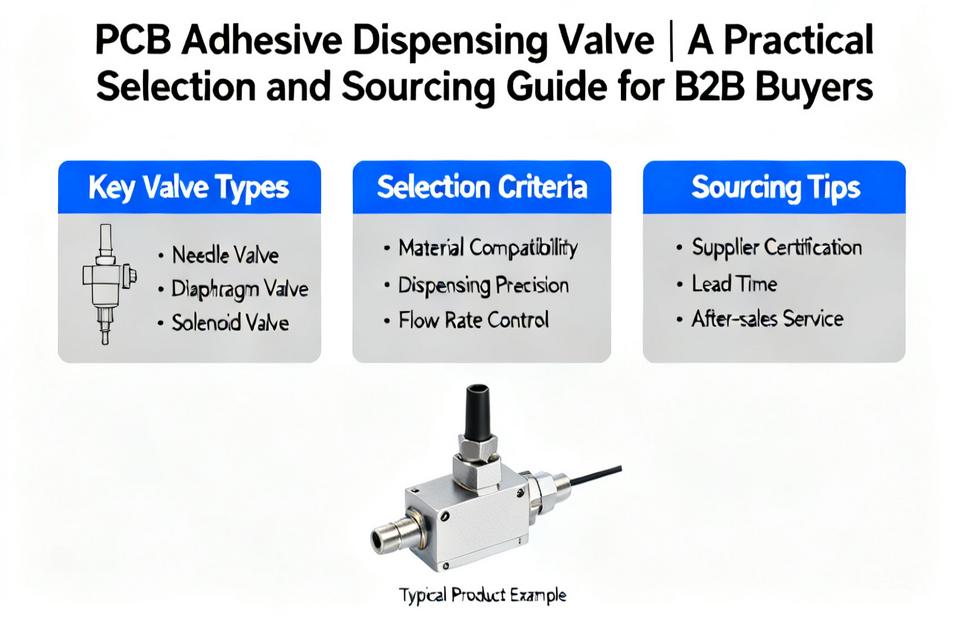
A PCB adhesive dispensing valve is a precision fluid-control component used to apply glue, epoxy, underfill, conformal coating, solder paste, and other adhesives onto printed circuit boards in a controlled and repeatable way. Whether you are dispensing dots for component bonding, lines for sealing, or small beads for underfill, the valve is the part that determines how accurately and consistently the adhesive reaches the target area. For overseas buyers sourcing equipment for electronics assembly, selecting the right dispensing valve is not only a technical decision but also a supply chain one, because valve performance affects yield, adhesive waste, and line uptime.
What a PCB Adhesive Dispensing Valve Does
The valve sits between the adhesive reservoir or pressure pot and the dispensing nozzle. Its job is to start and stop the adhesive flow on command, usually from a dispenser controller or a motion platform such as a gantry robot. In PCB assembly, the valve must handle materials with different viscosities, from low-viscosity conformal coatings to filled epoxies and thick underfill. A well-matched valve controls the shot size, prevents dripping between cycles, and keeps adhesive placement consistent across thousands of boards.
Common valve types include time-pressure valves, volumetric or positive-displacement valves, jet valves, and spray valves. Each works on a different principle. Time-pressure valves are simple and flexible, while positive-displacement valves are chosen when shot size consistency matters. Jet valves dispense without contact and are often used for high-speed, small-dot applications. The right choice depends on your adhesive, board layout, production speed, and tolerance requirements.
Key Features Buyers Should Evaluate
When reviewing a PCB adhesive dispensing valve, look beyond the basic description. Important features include the valve’s sealing design, the wetted materials, the nozzle interface, and how easily the valve can be cleaned or purged. Adhesives such as epoxy and underfill can cure quickly, so a valve that traps material in dead zones can cause clogging and downtime. Smooth internal flow paths and accessible seals help maintenance teams keep the line running.
Another feature to check is compatibility with the controller and robot. The valve should respond predictably to the trigger signal and work with the pressure or vacuum settings recommended for the adhesive. For high-speed SMT lines, repeatability and cycle rate matter. For low-volume or high-mix production, quick changeover and easy adjustment may be more valuable than maximum speed.
Materials and Construction
Adhesives used in PCB assembly can be abrasive, chemically aggressive, or sensitive to moisture and air. The valve body and wetted components should be made from materials suitable for the adhesive being dispensed. Stainless steel is common for structural parts, while seals may be made from materials chosen for chemical compatibility. Buyers should confirm the wetted material list with the supplier and match it to the adhesive datasheet.
Construction quality also affects service life. Precision-machined parts and stable sealing surfaces help maintain shot size over long production runs. A supplier or manufacturer with experience in dispensing valves can advise on material options and seal configurations for specific adhesives.
Typical Industrial Applications
PCB adhesive dispensing valves are used across electronics manufacturing. In SMT and through-hole assembly, they apply adhesive for component bonding and staking. In board-level protection, they dispense conformal coating in precise areas. Underfill valves apply epoxy beneath flip chips and BGA packages. Other uses include sealing, potting, and solder paste dispensing on prototype or repair lines.
Because PCB layouts vary, the valve must work with different nozzle types and dispense patterns, including dots, lines, and small area fills. Industrial application experience matters: a valve that works well for one adhesive may not suit another. Buyers should describe their adhesive, target dot size, cycle time, and board material when requesting a recommendation.
How to Choose the Right Valve
Start with the adhesive. Its viscosity, filler content, pot life, and curing behavior define the valve type and wetted materials. Next, define the dispensing task: dot size, line width, accuracy, and production volume. Then check how the valve will be mounted and triggered on your existing equipment. Finally, consider maintenance and spare parts availability.
If you are unsure, ask the supplier for a technical review based on your adhesive datasheet and board requirements. A reliable supplier will ask about your process rather than simply quote a model number. For custom projects, an OEM manufacturer can modify the valve interface, nozzle mount, or control signal to fit a specific machine.
OEM and Customization Options
Many valve suppliers offer OEM and custom configurations for equipment builders and automation integrators. Custom options may include special mounting brackets, modified nozzle interfaces, alternative seal materials, or label and packaging requirements. For buyers developing their own dispensing equipment, OEM cooperation can help align the valve with the machine’s control platform and maintenance plan.
Custom requirements should be documented clearly, including drawings, adhesive details, and acceptance criteria. A factory with in-house machining and assembly capability is often better placed to handle changes without long communication chains. Buyers should confirm what can be customized and what remains standard before placing an order.
Buying Considerations for Overseas Procurement
Price is only one part of the total cost. Consider spare parts supply, seal replacement kits, nozzle availability, and technical support response. For production lines, a valve that is easy to service and supported by documentation can reduce downtime. Buyers should also ask about packaging suitable for international shipping and whether the supplier has experience exporting to their region.
When comparing suppliers, request product drawings, material lists, and operating instructions. Avoid relying only on catalog photos. If the valve will be used with a specific adhesive, ask for compatibility guidance. It is reasonable to request samples for evaluation before a larger order, especially for custom or high-volume applications.
Supplier Selection
A good valve supplier understands PCB assembly processes and can explain how the valve behaves with different adhesives. Look for a manufacturer or factory with consistent quality control and clear communication. Suppliers who ask detailed questions about your application are usually better prepared to recommend a suitable valve. For OEM projects, confirm their experience with customization and their ability to support changes after delivery.
Frequently Asked Questions
How do I choose a dispensing valve for epoxy and underfill?
Start with the adhesive viscosity, filler content, and required shot size. Then select a valve type that matches your production speed and accuracy needs. Confirm wetted materials and seal compatibility with the adhesive datasheet, and test a sample before full adoption.
Can the valve be customized for my existing dispensing machine?
Many manufacturers offer OEM and custom options such as mounting brackets, nozzle interfaces, and control signal adaptations. Provide drawings and machine details so the supplier can confirm feasibility and avoid fit issues.
What maintenance items should I plan for?
Plan for seal replacement, nozzle cleaning, and periodic inspection of internal flow paths. Ask the supplier for recommended spare parts and a maintenance schedule based on your adhesive and production cycle.
How do I verify supplier quality before ordering?
Request technical documentation, material lists, and sample evaluation. Ask about their experience with PCB adhesives and their customization process. Clear specifications and responsive technical communication are useful indicators of a reliable supplier.
Conclusion
Selecting a PCB adhesive dispensing valve comes down to matching the valve to your adhesive, board requirements, and production equipment. Focus on repeatability, material compatibility, maintenance access, and supplier support rather than headline features alone. If you are comparing options or need an OEM or custom valve for a specific dispensing setup, share your adhesive and application details with a qualified supplier so they can help you confirm the right configuration.
