

Electric Mixing Pressure Tank | A Buyer’s Guide to Selection, Applications and Customization
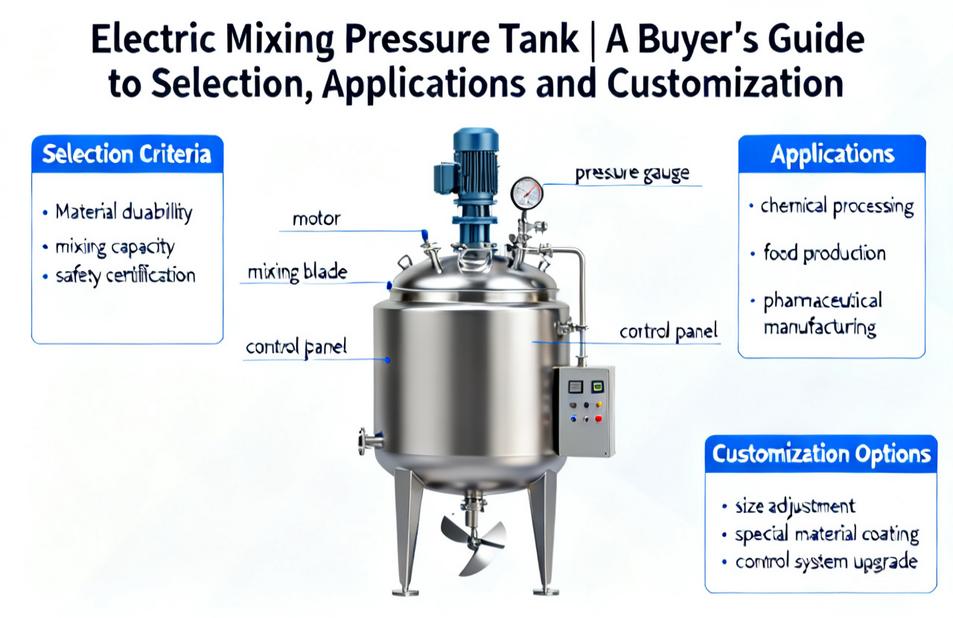
An electric mixing pressure tank is a pressurized vessel that combines mechanical agitation with controlled air or gas pressure to keep fluids homogeneous while delivering them through a closed dispensing or transfer system. It is commonly used in adhesive, sealant, paint, chemical, food and pharmaceutical production environments where materials tend to separate, settle or require consistent viscosity before application. For overseas buyers sourcing this equipment, understanding how the tank works, what construction options exist and how to match it to downstream processes is essential before requesting a quotation.
How an Electric Mixing Pressure Tank Works
The unit integrates three functions in one vessel: storage, mixing and pressure delivery. An electric motor drives a shaft and impeller inside the tank, continuously blending the material to prevent sedimentation or phase separation. At the same time, regulated air pressure or an inert gas blanket pushes the mixed fluid toward an outlet, feed line or dispensing valve. This design eliminates the need to transfer material between a separate mixer and a pressure pot, reducing handling losses, air exposure and cleaning time.
Typical configurations include a top-mounted motor with a geared or direct-drive shaft, a sealed lid with pressure and safety fittings, a discharge port at the bottom or side, and optional temperature control. The mixing action can be low-shear for simple blending or higher-shear for dispersion, depending on the impeller type selected.
Key Features Buyers Usually Evaluate
Mixing Performance and Motor Configuration
The impeller geometry, shaft speed and motor power should match the viscosity and volume of the material. Buyers should confirm whether variable speed control is available, since different batches may require different agitation intensities. Explosion-proof motors are often specified for solvent-based or flammable materials, but the exact classification must be confirmed with the supplier based on the intended environment.
Pressure and Level Control
Reliable pressure regulation is central to consistent output. Look for clearly described pressure regulator, gauge and relief arrangements, plus level indication or low-level protection where relevant. The tank should be designed so that pressure can be released safely before the lid is opened for refilling or cleaning.
Sealing and Access
Lid seals, shaft seals and discharge valves influence both pressure retention and maintenance frequency. Quick-open clamps, hinged lids and removable agitator assemblies can shorten changeover time between products, which matters in multi-material workshops.
Materials and Construction
Wetted parts are usually offered in stainless steel for chemical, food or hygienic applications, while carbon steel may suit non-corrosive industrial fluids. Surface finish, weld quality and interior accessibility affect cleanability and product residue. Buyers should ask for a material statement for the tank body, agitator, seals and fittings rather than assuming all components are the same grade.
Where the process involves abrasive fillers or reactive chemicals, the supplier may recommend alternative seal materials or coatings. These choices should be based on the actual fluid rather than a generic catalogue specification.
Industrial Applications
Electric mixing pressure tanks appear in several process environments:
- Adhesive and sealant dispensing, where fillers must stay suspended before application.
- Paint, ink and coating supply systems requiring continuous circulation.
- Chemical dosing and transfer lines in batch production.
- Food and cosmetic processing where gentle blending and hygienic design are required.
- Pharmaceutical and laboratory fluid handling with controlled agitation.
In each case, the tank acts as both a buffer vessel and a conditioned feed source, helping stabilize flow and composition downstream.
How to Choose the Right Unit
Selection should begin with the material itself: viscosity, density, solids content, reactivity and whether it is flammable. From there, define the required batch size, discharge rate, pressure range and cleaning routine. The available plant air supply, floor space and electrical environment also constrain the design.
Buyers should ask for a dimensional drawing, a list of wetted materials, motor details and a recommended impeller type. It is equally important to confirm how the tank will connect to existing pumps, valves and dispensing equipment, since interface mismatch is a common cause of commissioning delays. When comparing offers, evaluate the scope of supply rather than price alone: does the quotation include regulators, gauges, safety valves, level sensors and control wiring?
Customization and OEM Options
Many projects require adaptations rather than a standard catalogue model. A capable manufacturer or supplier can often provide custom tank volume, agitator geometry, port positions, lid design, mounting frames and control integration. OEM production is common for equipment builders who need the tank branded and configured for their own systems.
When discussing customization, provide a clear process description, fluid data and interface requirements. Request a drawing for approval before production, and confirm which parts are standardized and which are project-specific. This reduces the risk of ambiguous expectations between buyer and factory.
Supplier Selection and Buying Considerations
For international procurement, verify that the supplier can communicate technical details clearly, provide drawings and documentation in a usable format, and support spare parts over the equipment life. Ask how the factory handles pressure testing, cleaning and packing for export, and confirm the electrical configuration matches the destination country.
It is reasonable to request references for similar industrial applications, but buyers should rely on their own process data when specifying the unit. A supplier that asks detailed questions about your fluid and process is usually better positioned to propose a workable configuration than one that only quotes a price.
Frequently Asked Questions
What is the difference between a pressure tank and a mixing pressure tank?
A standard pressure tank stores and delivers fluid under pressure, while a mixing pressure tank also incorporates an agitator that keeps the material blended during storage and dispensing. The added mixing function is important for fluids that settle or separate.
Can the tank handle high-viscosity materials?
It can be configured for higher-viscosity fluids, but the motor power, impeller design and discharge arrangement must be selected accordingly. Buyers should provide viscosity data so the supplier can propose a suitable mixing and pressure configuration.
Is OEM or custom fabrication available?
Many manufacturers offer OEM and custom options, including tank size, port layout, agitator type, surface finish and control integration. The specific scope should be confirmed through drawings and a written specification before ordering.
What information should I provide for a quotation?
Useful details include fluid type and viscosity, batch volume, required pressure and flow, available utilities, electrical standards, cleaning requirements and any interface dimensions with existing equipment. This helps the supplier recommend a realistic configuration.
Conclusion
Choosing an electric mixing pressure tank is primarily a process-matching exercise. Start with the fluid and the downstream delivery requirements, then confirm materials, mixing performance, pressure control and interface details. Customization and OEM options can align the unit with existing production lines, but they depend on clear specifications from the buyer. If you are evaluating options for a specific application, sharing your process requirements with a qualified supplier is the most practical next step to obtain a suitable configuration and quotation.
